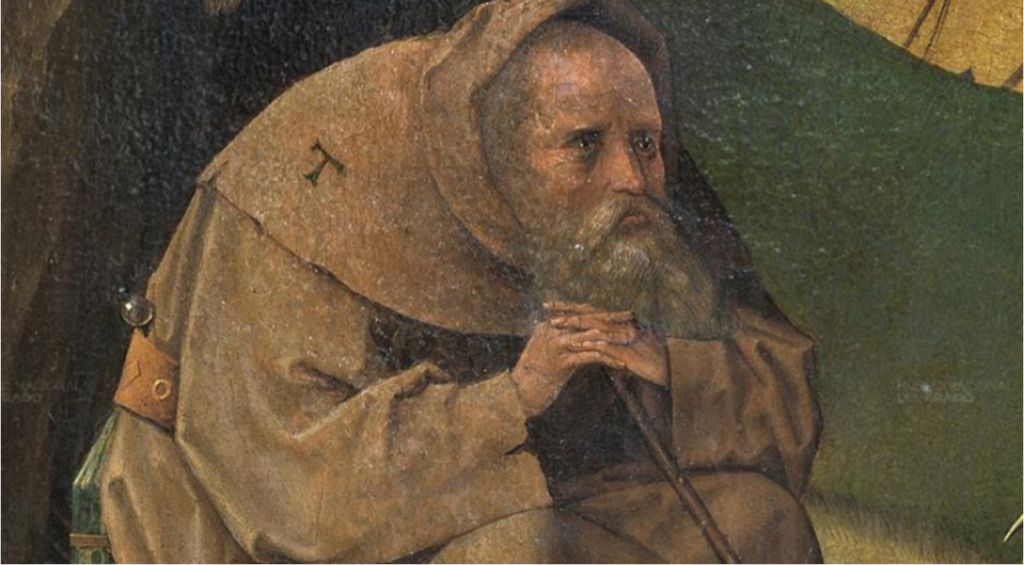
Saint of the Day – January 17 – Saint Anthony of Egypt 

(251 – 356)

Saint Anthony of Egypt’s Story

The life of Anthony will remind many people of Saint Francis of Assisi. At 20, Anthony was so moved by the Gospel message, “Go, sell what you have, and give to [the] poor” (Mark 10:21b), that he actually did just that with his large inheritance. He is different from Francis in that most of Anthony’s life was spent in solitude. He saw the world completely covered with snares, and gave the Church and the world the witness of solitary asceticism, great personal mortification and prayer. But no saint is antisocial, and Anthony drew many people to himself for spiritual healing and guidance.

At 54, he responded to many requests and founded a sort of monastery of scattered cells. Again, like Francis, he had great fear of “stately buildings and well-laden tables.”

At 60, he hoped to be a martyr in the renewed Roman persecution of 311, fearlessly exposing himself to danger while giving moral and material support to those in prison. At 88, he was fighting the Arian heresy, that massive trauma from which it took the Church centuries to recover. “The mule kicking over the altar” denied the divinity of Christ.

Anthony is associated in art with a T-shaped cross, a pig and a book. The pig and the cross are symbols of his valiant warfare with the devil—the cross his constant means of power over evil spirits, the pig a symbol of the devil himself. The book recalls his preference for “the book of nature” over the printed word. Anthony died in solitude at age 105.

Reflection

In an age that smiles at the notion of devils and angels, a person known for having power over evil spirits must at least make us pause. And in a day when people speak of life as a “rat race,” one who devotes a whole life to solitude and prayer points to an essential of the Christian life in all ages. Anthony’s hermit life reminds us of the absoluteness of our break with sin and the totality of our commitment to Christ. Even in God’s good world, there is another world whose false values constantly tempt us.

Saint Anthony of Egypt is the Patron Saint of:

Butchers
Gravediggers
Skin Diseases

//Franciscan Media//
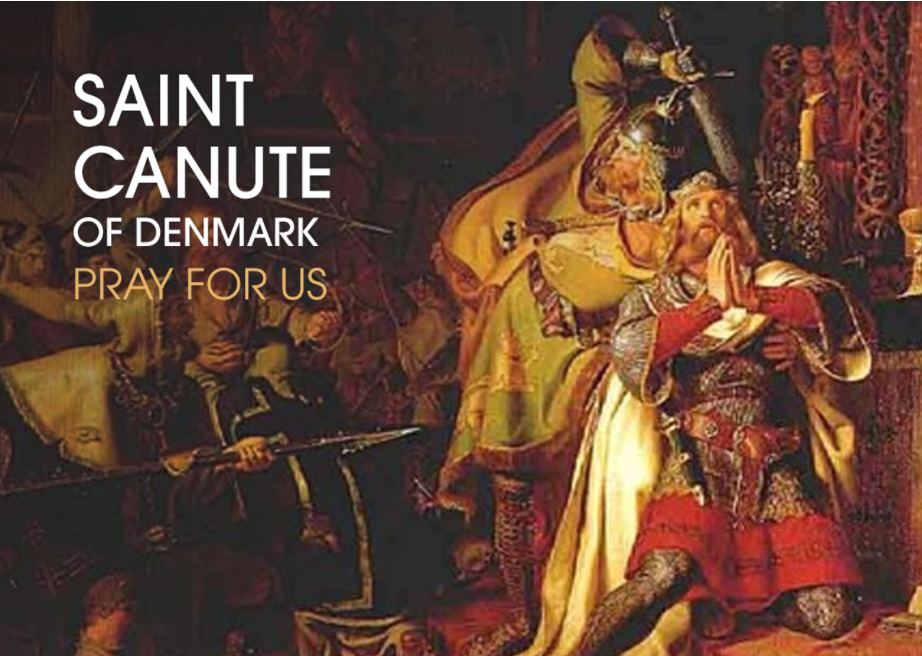

Saint of the Day – January 19 – Saint Canute IV of Denmark

St. Canute IV of Denmark (1042 – 1086 A.D.), also known as Canute the Holy, was one of thirteen sons born to the king of Denmark. Canute later succeeded his brother to the throne and reigned as king from 1080 to 1086. He was a devout Catholic, a zealous propagator of the faith, and a brave warrior, in addition to being a man of prayer, penance, austerity, and charity towards the poor and weak among his people. The happiness of his people and the interests of the Church were his motivation, often putting him in opposition to the aristocracy. He fought against the barbarian nations and worked to strengthen the power of the monarchy, but some of his laws were unpopular and caused unrest among the people. Canute sought to expand Denmak’s territory and believed he had a claim to the English throne. In 1085 he gathered his fleet and planned an invasion of England to overthrow William the Conquerer, a plan which was never realized. Instead, a revolt broke out against Canute, causing him to take refuge inside St. Alban’s Priory in Odense. Canute, his brother, and seventeen of his men were pursued and killed by rebels in front of the altar. He was named a martyr for the faith, and many miracles were reported at his tomb. He was canonized in the year 1101, the first Danish saint. St. Canute is the patron saint of Denmark. His feast day is January 19.

//Catholic Company//


Saint of the Day for January 20 – Saint Sebastian

(c. 256 – January 20, 287)

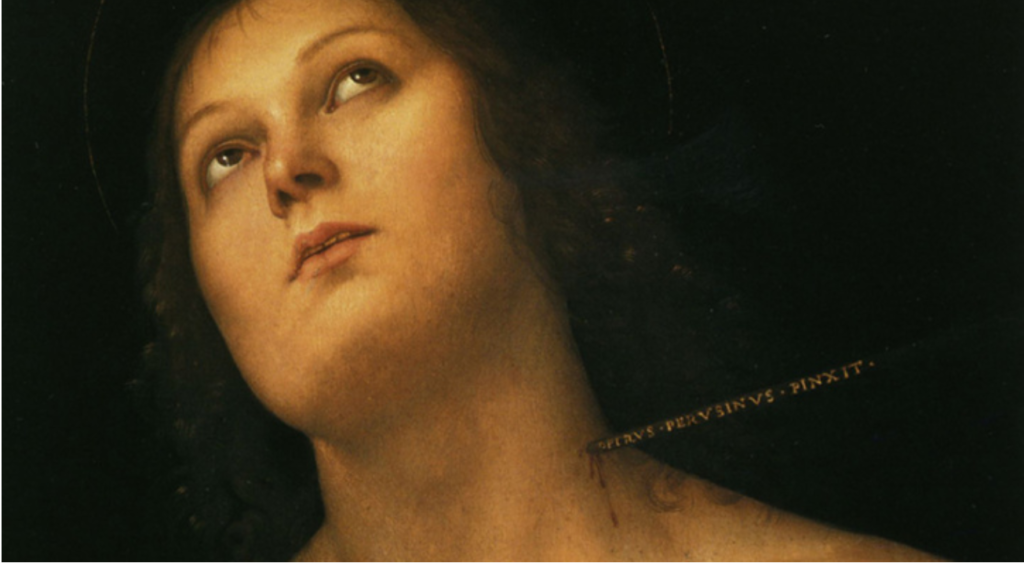
Saint Sebastian’s Story

Almost nothing is historically certain about Sebastian except that he was a Roman martyr, was venerated in Milan even in the time of Saint Ambrose and was buried on the Appian Way, probably near the present Basilica of St. Sebastian. Devotion to him spread rapidly, and he is mentioned in several martyrologies as early as 350.

The legend of Saint Sebastian is important in art, and there is a vast iconography. Scholars now agree that a pious fable has Sebastian entering the Roman army because only there could he assist the martyrs without arousing suspicion. Finally he was found out, brought before Emperor Diocletian and delivered to Mauritanian archers to be shot to death. His body was pierced with arrows, and he was left for dead. But he was found still alive by those who came to bury him. He recovered, but refused to flee.

One day he took up a position near where the emperor was to pass. He accosted the emperor, denouncing him for his cruelty to Christians. This time the sentence of death was carried out. Sebastian was beaten to death with clubs. He was buried on the Appian Way, close to the catacombs that bear his name.

Reflection

The fact that many of the early saints made such a tremendous impression on the Church—awakening widespread devotion and great praise from the greatest writers of the Church—is proof of the heroism of their lives. As has been said, legends may not be literally true. Yet they may express the very substance of the faith and courage evident in the lives of these heroes and heroines of Christ.

Saint Sebastian is the Patron Saint of:

Athletes

//Franciscan Media//


Saint of the Day – January 21 – Saint Agnes

(d. c. 258)

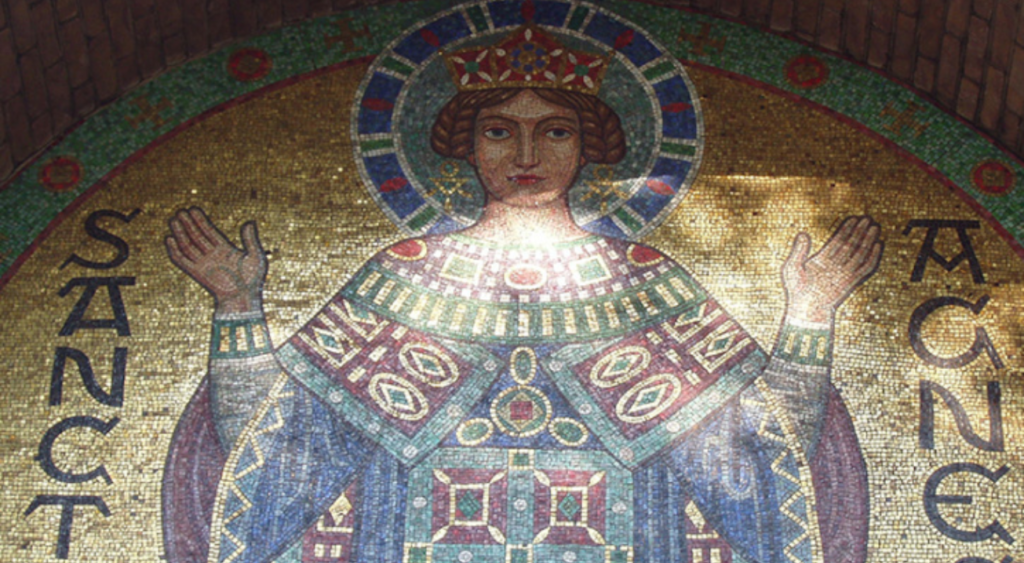
Saint Agnes’ Story

Almost nothing is known of this saint except that she was very young—12 or 13—when she was martyred in the last half of the third century. Various modes of death have been suggested—beheading, burning, strangling.

Legend has it that Agnes was a beautiful girl whom many young men wanted to marry. Among those she refused, one reported her to the authorities for being a Christian. She was arrested and confined to a house of prostitution. The legend continues that a man who looked upon her lustfully lost his sight and had it restored by her prayer. Agnes was condemned, executed, and buried near Rome in a catacomb that eventually was named after her. The daughter of Constantine built a basilica in her honor.

Reflection

Like that of Maria Goretti in the 20th century, the martyrdom of a virginal young girl made a deep impression on a society enslaved to a materialistic outlook. Also like Agatha, who died in similar circumstances, Agnes is a symbol that holiness does not depend on length of years, experience, or human effort. It is a gift God offers to all.

Saint Agnes is the Patron Saint of:

Girls
Girl Scouts

//Franciscan Media//


Saint of the Day – January 23 – Saint Marianne Cope

(JANUARY 23, 1838 – AUGUST 9, 1918)

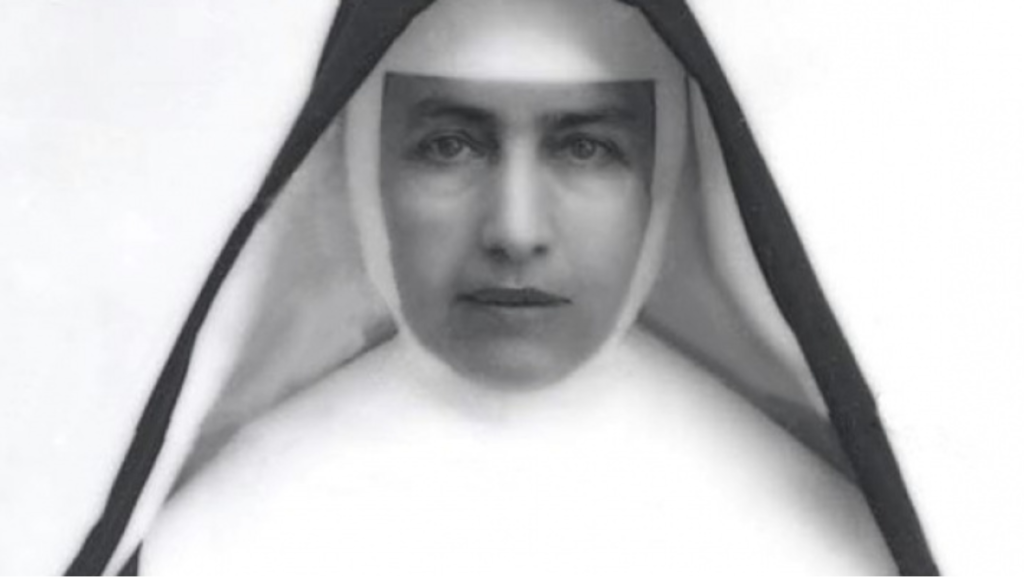
Saint Marianne Cope’s Story

Though leprosy scared off most people in 19th-century Hawaii, that disease sparked great generosity in the woman who came to be known as Mother Marianne of Molokai. Her courage helped tremendously to improve the lives of its victims in Hawaii, a territory annexed to the United States during her lifetime (1898).

Mother Marianne’s generosity and courage were celebrated at her May 14, 2005, beatification in Rome. She was a woman who spoke “the language of truth and love” to the world, said Cardinal José Saraiva Martins, prefect of the Congregation for Saints’ Causes. Cardinal Martins, who presided at the beatification Mass in St. Peter’s Basilica, called her life “a wonderful work of divine grace.” Speaking of her special love for persons suffering from leprosy, he said, “She saw in them the suffering face of Jesus. Like the Good Samaritan, she became their mother.”

On January 23, 1838, a daughter was born to Peter and Barbara Cope of Hessen-Darmstadt, Germany. The girl was named after her mother. Two years later the Cope family emigrated to the United States and settled in Utica, New York. Young Barbara worked in a factory until August 1862, when she went to the Sisters of the Third Order of Saint Francis in Syracuse, New York. After profession in November of the next year, she began teaching at Assumption parish school.

Marianne held the post of superior in several places and was twice the novice mistress of her congregation. A natural leader, three different times she was superior of St. Joseph’s Hospital in Syracuse, where she learned much that would be useful during her years in Hawaii.

Elected provincial in 1877, Mother Marianne was unanimously re-elected in 1881. Two years later the Hawaiian government was searching for someone to run the Kakaako Receiving Station for people suspected of having leprosy. More than 50 religious communities in the United States and Canada were asked. When the request was put to the Syracuse sisters, 35 of them volunteered immediately. On October 22, 1883, Mother Marianne and six other sisters left for Hawaii where they took charge of the Kakaako Receiving Station outside Honolulu; on the island of Maui they also opened a hospital and a school for girls.

In 1888, Mother Marianne and two sisters went to Molokai to open a home for “unprotected women and girls” there. The Hawaiian government was quite hesitant to send women for this difficult assignment; they need not have worried about Mother Marianne! On Molokai she took charge of the home that Saint Damien de Veuster had established for men and boys. Mother Marianne changed life on Molokai by introducing cleanliness, pride, and fun to the colony. Bright scarves and pretty dresses for the women were part of her approach.

Awarded the Royal Order of Kapiolani by the Hawaiian government and celebrated in a poem by Robert Louis Stevenson, Mother Marianne continued her work faithfully. Her sisters have attracted vocations among the Hawaiian people and still work on Molokai.

Mother Marianne died on August 9, 1918, was beatified in 2005, and canonized seven years later.

Reflection

The government authorities were reluctant to allow Mother Marianne to be a mother on Molokai. Thirty years of dedication proved their fears unfounded. God grants gifts regardless of human shortsightedness and allows those gifts to flower for the sake of the kingdom.

//Franciscan Media//


Saint of the Day – January 26 – Saint Timothy

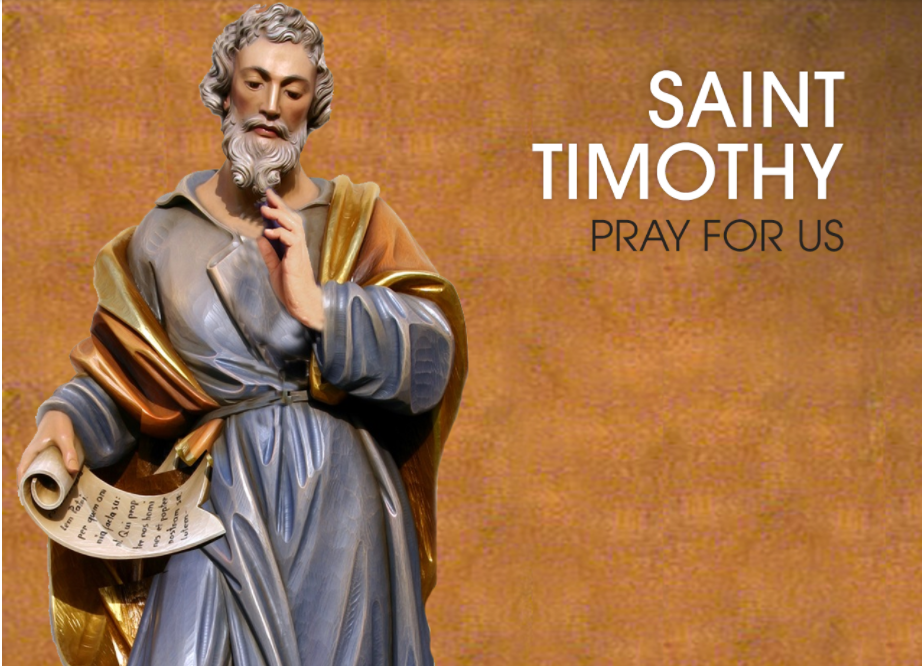
St. Timothy (1st c.) was born in Galatia in Asia Minor, the son of a Greek father and a Jewish mother. Timothy was a convert of St. Paul the Apostle around the year 47 A.D. Timothy became a trusted friend and a beloved spiritual son to Paul, laboring faithfully alongside him in his apostolic work for many years. Paul mentions Timothy repeatedly in his letters and dispatched him on important missionary work to the local churches he founded. Timothy was ordained to the priesthood at the hands of St. Paul and was later made bishop of Ephesus. St. Timothy was stoned to death thirty years after St. Paul’s martyrdom for having denounced the worship of the false goddess Diana. St. Timothy is the patron of intestinal and stomach problems, because Paul admonished him to ease his penance and drink a little wine for the sake of his health, instead of only water. His feast day is January 26.


Saint of the Day – January 24 – Saint Francis de Sales

(August 21, 1567 – December 28, 1622)

Saint Francis de Sales’ Story

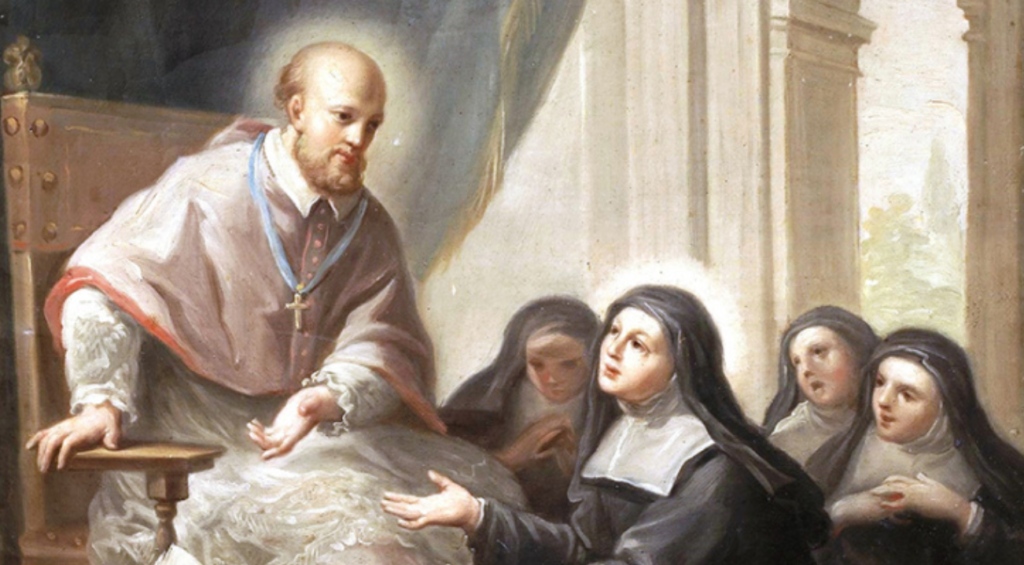
Francis was destined by his father to be a lawyer so that the young man could eventually take his elder’s place as a senator from the province of Savoy in France. For this reason Francis was sent to Padua to study law. After receiving his doctorate, he returned home and, in due time, told his parents he wished to enter the priesthood. His father strongly opposed Francis in this, and only after much patient persuasiveness on the part of the gentle Francis did his father finally consent. Francis was ordained and elected provost of the Diocese of Geneva, then a center for the Calvinists. Francis set out to convert them, especially in the district of Chablais. By preaching and distributing the little pamphlets he wrote to explain true Catholic doctrine, he had remarkable success.

At 35, he became bishop of Geneva. While administering his diocese he continued to preach, hear confessions, and catechize the children. His gentle character was a great asset in winning souls. He practiced his own axiom, “A spoonful of honey attracts more flies than a barrelful of vinegar.”

Besides his two well-known books, the Introduction to the Devout Life and A Treatise on the Love of God, he wrote many pamphlets and carried on a vast correspondence. For his writings, he has been named patron of the Catholic Press. His writings, filled with his characteristic gentle spirit, are addressed to lay people. He wants to make them understand that they too are called to be saints. As he wrote in The Introduction to the Devout Life: “It is an error, or rather a heresy, to say devotion is incompatible with the life of a soldier, a tradesman, a prince, or a married woman…. It has happened that many have lost perfection in the desert who had preserved it in the world.”

In spite of his busy and comparatively short life, he had time to collaborate with another saint, Jane Frances de Chantal, in the work of establishing the Sisters of the Visitation. These women were to practice the virtues exemplified in Mary’s visit to Elizabeth: humility, piety, and mutual charity. They at first engaged to a limited degree in works of mercy for the poor and the sick. Today, while some communities conduct schools, others live a strictly contemplative life.

Reflection

Francis de Sales took seriously the words of Christ, “Learn of me for I am meek and humble of heart.” As he said himself, it took him 20 years to conquer his quick temper, but no one ever suspected he had such a problem, so overflowing with good nature and kindness was his usual manner of acting. His perennial meekness and sunny disposition won for him the title of “Gentleman Saint.”

Saint Francis de Sales is the Patron Saint of:

Authors
Deafness
Journalists
Writers

//Franciscan Media//


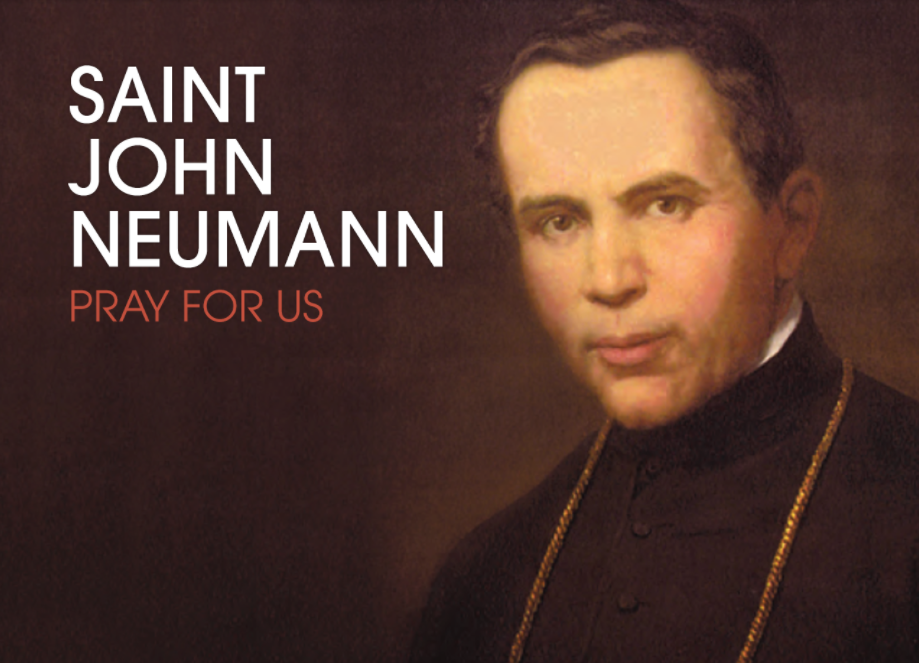
Saint of the Day – January 5 – Saint John Neumann

(MARCH 28, 1811 – JANUARY 5, 1860)

Saint of the Day for January 5

Saint John Neumann’s Story

Perhaps because the United States got a later start in the history of the world, it has relatively few canonized saints, but their number is increasing.

John Neumann was born in what is now the Czech Republic. After studying in Prague, he came to New York at 25 and was ordained a priest. He did missionary work in New York until he was 29, when he joined the Redemptorists and became its first member to profess vows in the United States. He continued missionary work in Maryland, Virginia and Ohio, where he became popular with the Germans.

At 41, as bishop of Philadelphia, he organized the parochial school system into a diocesan one, increasing the number of pupils almost twentyfold within a short time.

Gifted with outstanding organizing ability, he drew into the city many teaching communities of sisters and the Christian Brothers. During his brief assignment as vice provincial for the Redemptorists, he placed them in the forefront of the parochial movement.

Well-known for his holiness and learning, spiritual writing and preaching, on October 13, 1963, John Neumann became the first American bishop to be beatified. Canonized in 1977, he is buried in St. Peter the Apostle Church in Philadelphia.

Reflection

Neumann took seriously our Lord’s words, “Go and teach all nations.” From Christ he received his instructions and the power to carry them out. For Christ does not give a mission without supplying the means to accomplish it. The Father’s gift in Christ to John Neumann was his exceptional organizing ability, which he used to spread the Good News. Today the Church is in dire need of men and women to continue in our times the teaching of the Good News. The obstacles and inconveniences are real and costly. Yet when Christians approach Christ, he supplies the necessary talents to answer today’s needs. The Spirit of Christ continues his work through the instrumentality of generous Christians.

Saint John Neumann is a Patron Saint of:

Educators/Teachers

//Franciscan Media//


Saint of the Day – January 6 – Saint Andre Bessette

(AUGUST 9, 1845 – JANUARY 6, 1937)

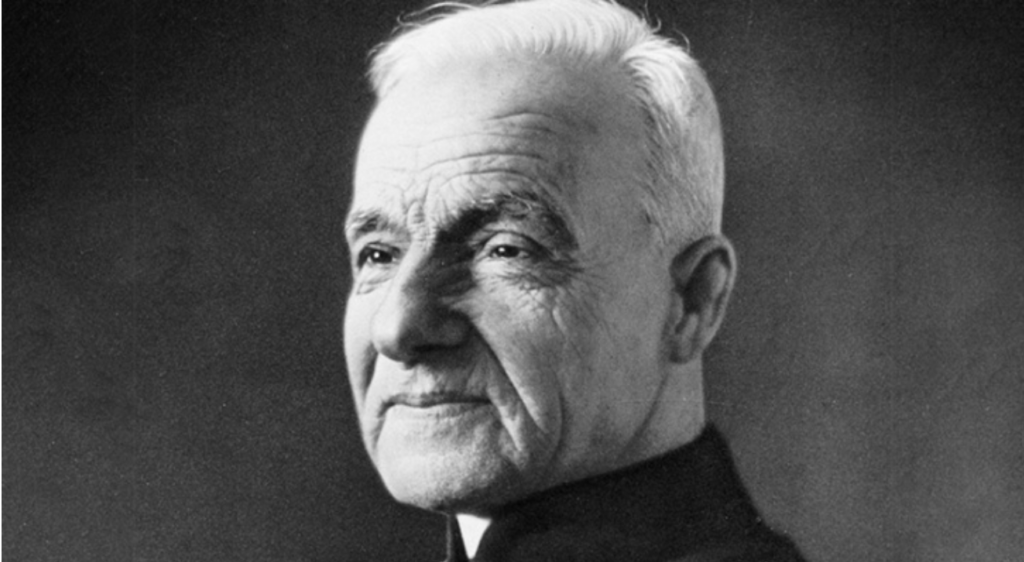
Saint André Bessette’s Story

Brother André expressed a saint’s faith by a lifelong devotion to Saint Joseph.

Sickness and weakness dogged André from birth. He was the eighth of 12 children born to a French Canadian couple near Montreal. Adopted at 12, when both parents had died, he became a farmhand. Various trades followed: shoemaker, baker, blacksmith—all failures. He was a factory worker in the United States during the boom times of the Civil War.

At 25, André applied for entrance into the Congregation of Holy Cross. After a year’s novitiate, he was not admitted because of his weak health. But with an extension and the urging of Bishop Bourget, he was finally received. He was given the humble job of doorkeeper at Notre Dame College in Montreal, with additional duties as sacristan, laundry worker and messenger. “When I joined this community, the superiors showed me the door, and I remained 40 years,” he said.

In his little room near the door, he spent much of the night on his knees. On his windowsill, facing Mount Royal, was a small statue of Saint Joseph, to whom he had been devoted since childhood. When asked about it he said, “Some day, Saint Joseph is going to be honored in a very special way on Mount Royal!”

When he heard someone was ill, he visited to bring cheer and to pray with the sick person. He would rub the sick person lightly with oil taken from a lamp burning in the college chapel. Word of healing powers began to spread.

When an epidemic broke out at a nearby college, André volunteered to nurse. Not one person died. The trickle of sick people to his door became a flood. His superiors were uneasy; diocesan authorities were suspicious; doctors called him a quack. “I do not cure,” he said again and again. “Saint Joseph cures.” In the end he needed four secretaries to handle the 80,000 letters he received each year.

For many years the Holy Cross authorities had tried to buy land on Mount Royal. Brother André and others climbed the steep hill and planted medals of Saint Joseph. Suddenly, the owners yielded. André collected $200 to build a small chapel and began receiving visitors there—smiling through long hours of listening, applying Saint Joseph’s oil. Some were cured, some not. The pile of crutches, canes and braces grew.

The chapel also grew. By 1931, there were gleaming walls, but money ran out. “Put a statue of Saint Joseph in the middle. If he wants a roof over his head, he’ll get it.” The magnificent Oratory on Mount Royal took 50 years to build. The sickly boy who could not hold a job died at 92.

He is buried at the Oratory. He was beatified in 1982 and canonized in 2010. At his canonization in October 2010, Pope Benedict XVI said that Saint Andre “lived the beatitude of the pure of heart.”

Reflection

Rubbing ailing limbs with oil or a medal? Planting a medal to buy land? Isn’t this superstition? Aren’t we long past that superstitious people rely only on the “magic” of a word or action. Brother André’s oil and medals were authentic sacramentals of a simple, total faith in the Father who lets his saints help him bless his children.

//Franciscan Media//


Saint of the Day – January 8 – Saint Apollinaris Claudius

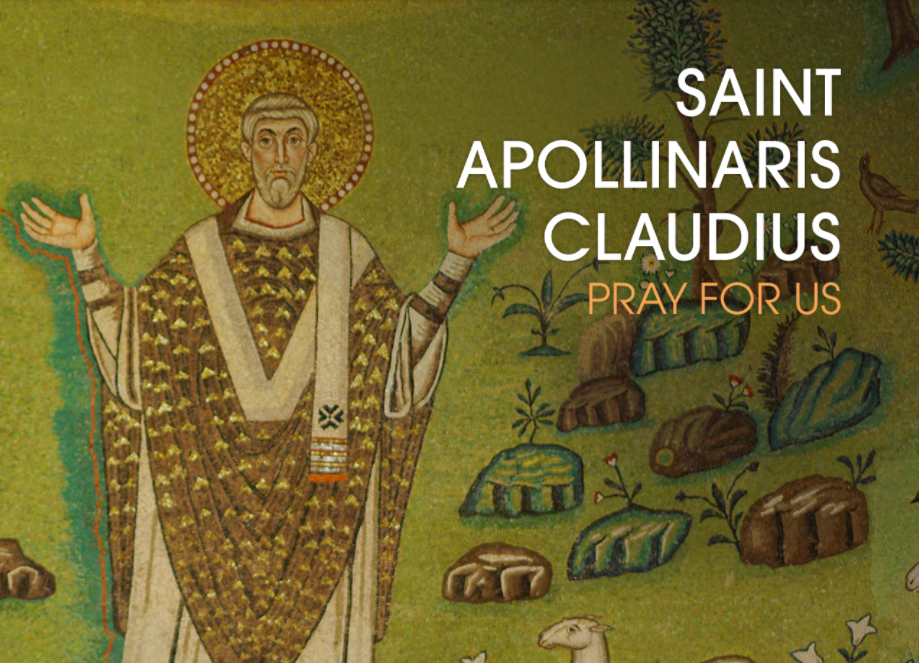
St. Apollinaris Claudius (2nd c.), also called St. Apollinaris of Hierapolis, was a bishop in what is today Turkey. He became famous for his polemical writings against the heretics of his day, showing that their theological errors were taken from the pagans. His most famous work was an Apologia for the Christians addressed to Roman Emperor Marcus Aurelius in the year 177 A.D. In it he reminded the Emperor of a miracle he received because of the Christians: when his army was nearly defeated in an attempt to conquer the Germanic barbarians, it was the prayers of the Christians among his soldiers which obtained the needed relief and the military victory, even though Christianity was illegal. In light of this miracle, Apollinaris requested the Emperor’s protection of Christians from persecution. St. Apollinaris’ work earned him the moniker, “Apollinaris the Apologist.” His writings are largely lost, and what we know of his work comes to us from other early Christian writers including St. Jerome and Eusebius. His feast day is January 8th.

//Catholic Company//