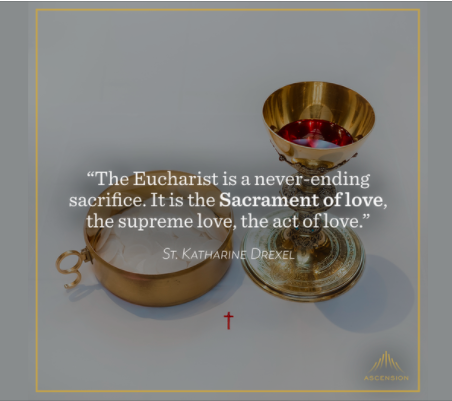
A Never-Ending Sacrifice
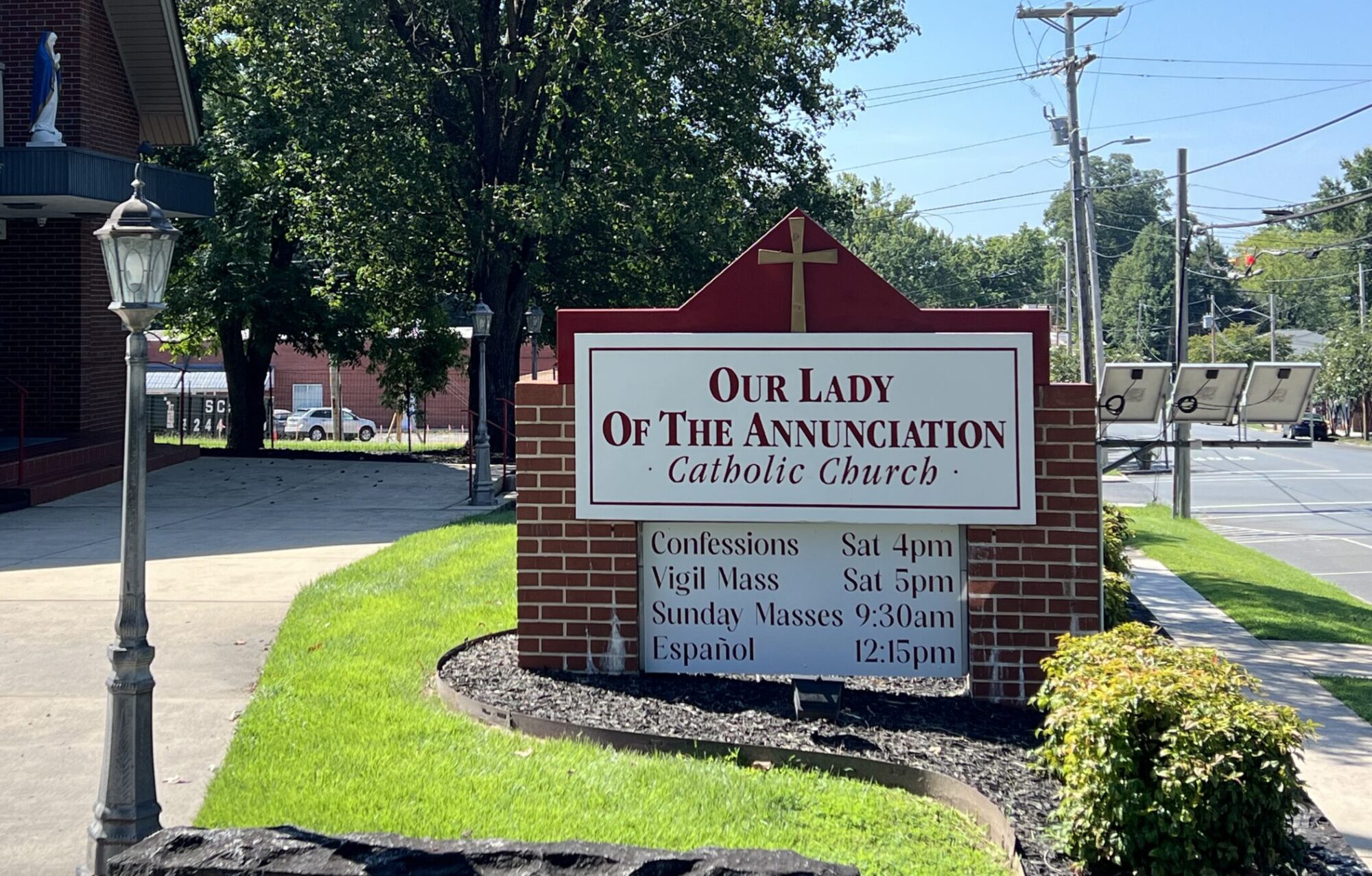
416 N 2nd St, Albemarle NC 28001 | (704) 982-2910
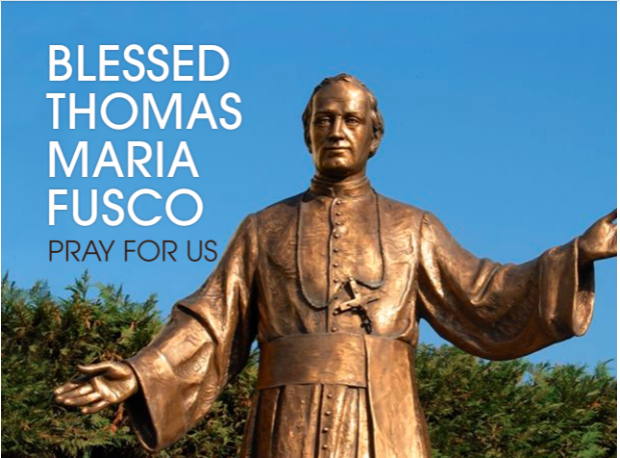
Blessed Thomas Maria Fusco, also known as Tommaso, (1831-1891) was born to a noble and pious family in Italy, the seventh of eight children. He was orphaned at an early age and raised by his uncle, a priest, who oversaw his education. He had a deep love for the faith, especially to the Passion of Christ and Our Lady of Sorrows. He became a priest at the age of 24 and opened a school in his own home. He later became an itinerant missionary throughout southern Italy. After traveling for a number of years he opened another school, this time to train priests on how to be good confessors. He also founded the Priestly Society of the Catholic Apostolate to support the missions, which gained papal approval. During his work with the poor he discerned a call to start a new religious order of sisters, the Daughters of Charity of the Most Precious Blood, to minister to orphaned children. In addition to all of this, Fusco was also a parish priest, a confessor to a group of cloistered nuns, and a spiritual father to a lay group at the nearby Shrine of Our Lady of Mount Carmel. He died of liver disease at the age of 59. He was beatified by Pope St. John Paul II in 2001. His feast day is February 24.
//Catholic Company//
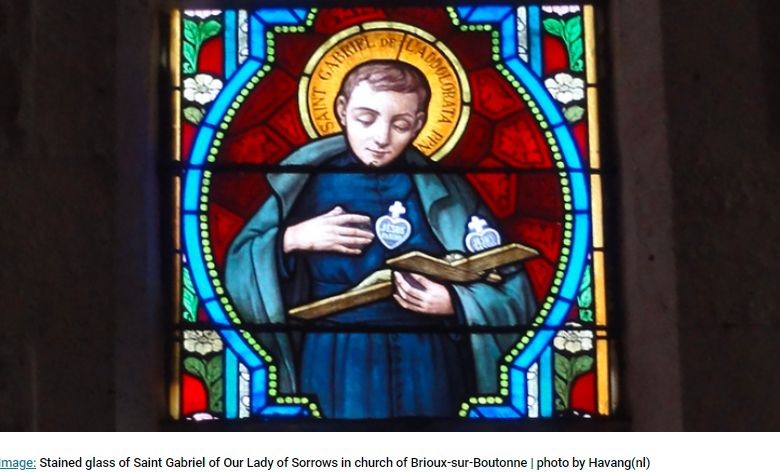
St. Gabriel Possenti’s Story (March 1, 1838 – February 27, 1862)
Born in Italy into a large family and baptized Francis, Saint Gabriel lost his mother when he was only four years old. He was educated by the Jesuits and, having been cured twice of serious illnesses, came to believe that God was calling him to the religious life. Young Francis wished to join the Jesuits but was turned down, probably because of his age, not yet 17. Following the death of a sister to cholera, his resolve to enter religious life became even stronger and he was accepted by the Passionists. Upon entering the novitiate he was given the name Gabriel of Our Lady of Sorrows.
Ever popular and cheerful, Gabriel quickly was successful in his effort to be faithful in little things. His spirit of prayer, love for the poor, consideration of the feelings of others, exact observance of the Passionist Rule as well as his bodily penances—always subject to the will of his wise superiors— made a deep impression on everyone.
His superiors had great expectations of Gabriel as he prepared for the priesthood, but after only four years of religious life symptoms of tuberculosis appeared. Ever obedient, he patiently bore the painful effects of the disease and the restrictions it required, seeking no special notice. He died peacefully on February 27, 1862, at age 24, having been an example to both young and old.
Saint Gabriel of Our Lady of Sorrows was canonized in 1920.
Reflection
When we think of achieving great holiness by doing little things with love and grace, Therese of Lisieux comes first to mind. Like her, Gabriel died painfully from tuberculosis. Together they urge us to tend to the small details of daily life, to be considerate of others’ feelings every day. Our path to sanctity, like theirs, probably lies not in heroic doings but in performing small acts of kindness every day.
Saint Gabriel of Our Lady of Sorrows is a Patron Saint of:
Clergy
Students
Young People
//Franciscan Media//
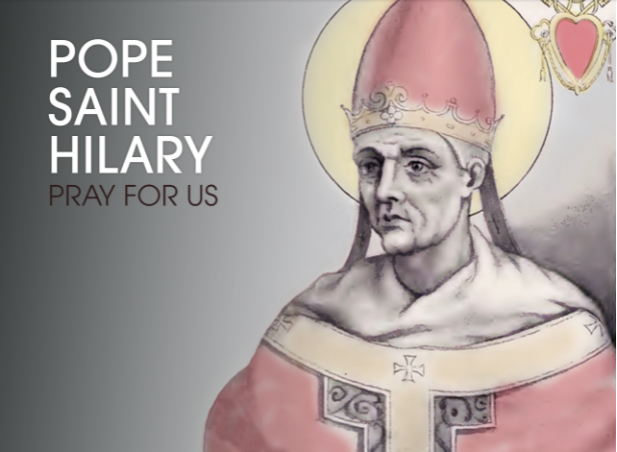
Pope Saint Hilary (5th c.) was Bishop of Rome from 461 to 468. Not much is known of his early life other than that he was from Sardinia. He rose to prominence in the Church when he became archdeacon under Pope St. Leo the Great, working closely with him as a trusted aid. St. Leo sent Hilary as one of the papal legates to the Council of Ephesus in 449. There St. Hilary fought bravely against the monophysite heresy, for which his life was threatened. He was forced into hiding and fled back to Rome for safety. He was so highly esteemed that after Pope Leo’s death he was elected to the papacy. As pope, St. Hilary fought for the rights of the papacy in spiritual matters against the Roman Emperor, and increased organization and discipline between the bishops and the Holy See. He also did much work in building, remodeling, and decorating Roman churches and other public places. Pope St. Hilary’s feast day is February 28.
//Catholic Company//
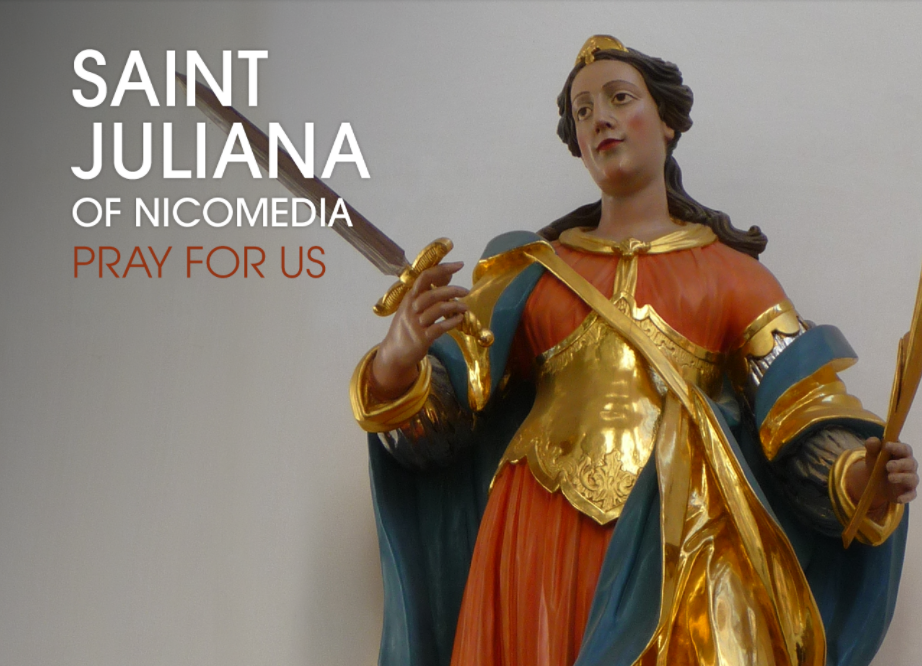
St. Juliana of Nicomedia (c. 270 A.D.), also known as St. Juliana of Cumae, was the daughter of noble pagan parents, born in Nicomedia, a Greek city in ancient Turkey. Although her father was hostile to Christians, Juliana secretly accepted baptism. Her father arranged her marriage to a pagan nobleman and Roman senator. When the time for her wedding came, Juliana refused her consent to be married unless her betrothed converted to the Christian faith. Her father retaliated by mercilessly abusing her, but Juliana would not give in. Her betrothed then denounced her as a Christian before the tribunal under the persecutions of the Roman Emperor Diocletian. St. Juliana was unwavering in her faith, even after the devil himself appeared to tempt her during her sufferings. She was then publicly tortured by being burned, boiled in oil, and finally beheaded. Some accounts say she died together with St. Barbara. Many were converted to the Christian faith upon witnessing her fortitude in the face of her tortures. St. Juliana is the patron saint of sickness and bodily ills. Her feast day is February 16th
//Catholic Company//
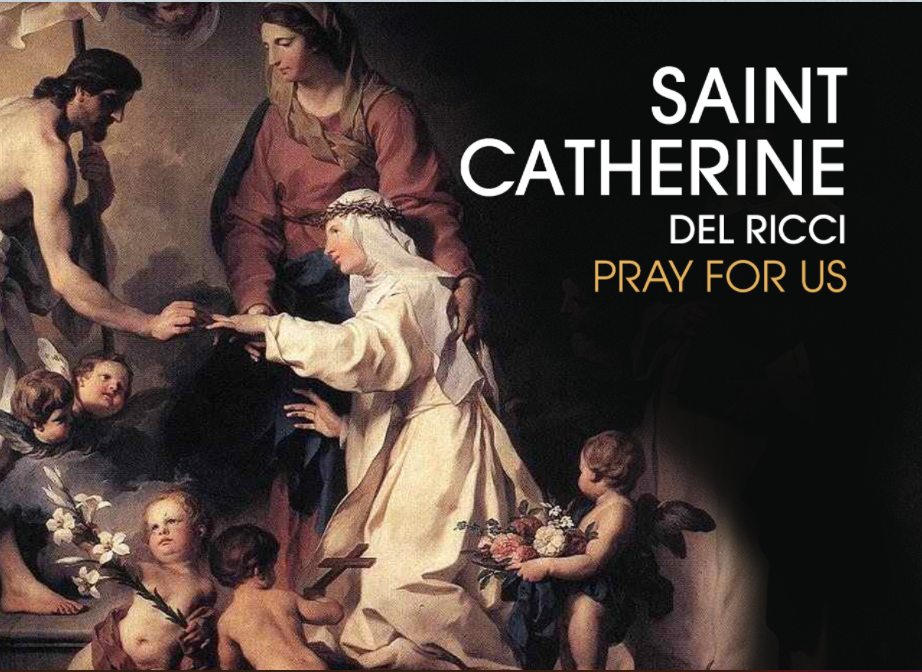
St. Catherine del Ricci (1522-1590) was born with the name Alessandra in Florence, Italy, to a respectable merchant family. Her mother died while she was very young, so that from her childhood Alessandra took the Blessed Virgin Mary as her mother. She was given to prayer and religious fervor, and at the age of fourteen decided to enter a strict Third Order Dominican convent, taking Catherine as her religious name. She developed into a great mystic with an intense devotion to the Passion of Christ. For many years Catherine would go into ecstasy from noon every Thursday through 4 p.m. on Friday, experiencing in a mystical manner the sufferings of Christ during his Passion. She was also given the spiritual gift of the stigmata; Christ’s wounds would appear on her body through the course of the ecstasy. After enduring much humiliation for years on account of these sufferings, she was eventually accepted as a holy woman and later became prioress. Her advice was widely sought on many spiritual and practical matters. Despite being cloistered, she kept up a loving correspondence with many relatives, friends, and her spiritual children. Among those in her correspondence were three future popes, Pope Marcellus II, Pope Clement VIII, and Pope Leo XI. Her feast day is February 13.
//Franciscan Media//
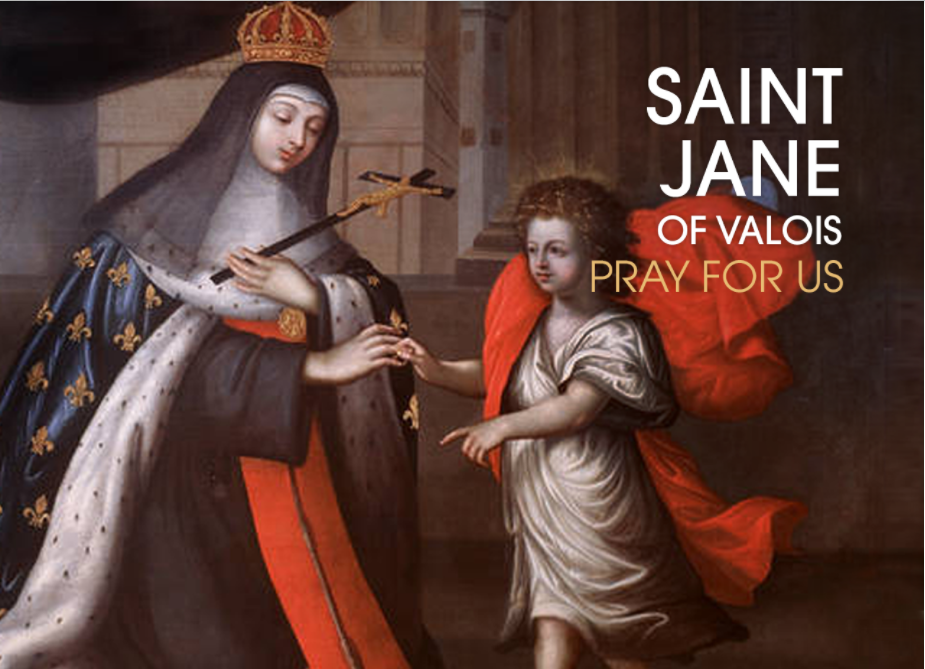
St. Jane of Valois (1464-1505) was born to French King Louis XI and Charlotte of Savoy. Much of her life was marked by neglect and emotional abuse. Her father resented her because she was a sickly and deformed female child. He sent her away to a remote country home where she was carelessly raised before being married off at the age of nine to her cousin, the Duke of Orléans. Her husband likewise despised and publicly humiliated her, and their marriage was never consummated. Jane had a devotion to the Blessed Virgin Mary from a young age, especially in the mystery of the Incarnation. One day Our Lady appeared to Jane and told her that in the future she would found a religious community. Through her veneration of the Blessed Mother, Jane found the strength to be a loyal and devoted wife during her painful twenty-two year marriage. When her husband became king, he had their marriage annulled. This left Jane free to found the Order of the Annunciation dedicated to imitating Mary’s virtues, as Our Lady foretold. She also gave her Order the duty of constant prayer for the souls of her father and husband who both mistreated her. St. Jane of Valois’ feast day is February 4th.
//Catholic Company//
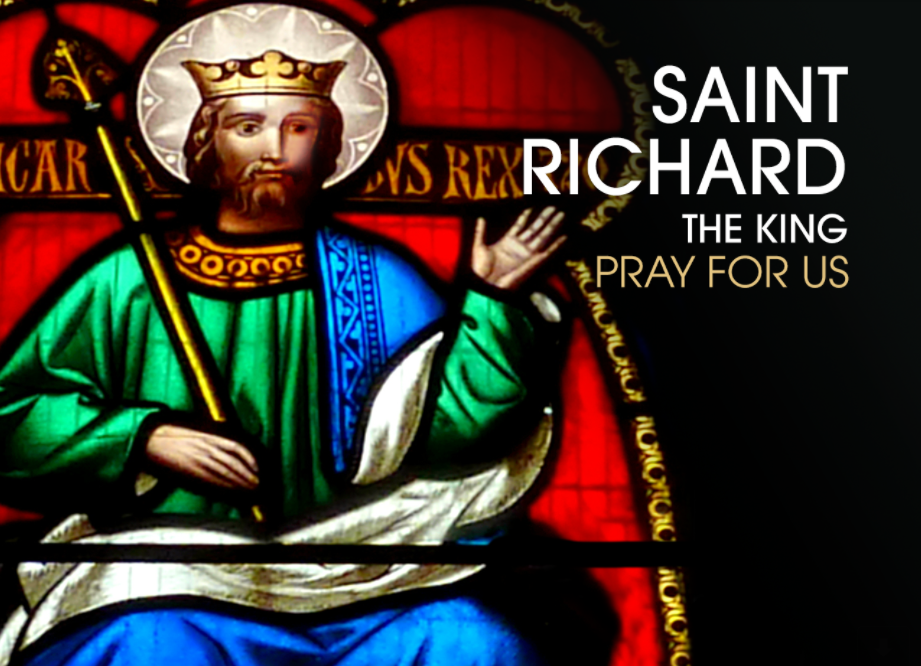
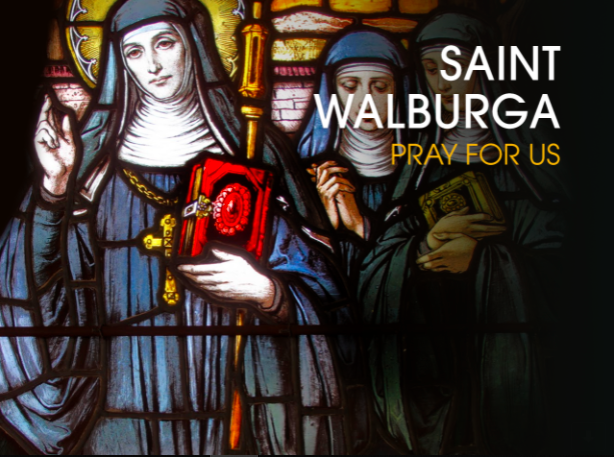
St. Richard the King (c. 720 A.D.), also known as Richard the Pilgrim, was a Saxon king born in Wessex, England, who was related by blood to the royal house of Kent. His brother-in-law was St. Boniface, and three of his children are numbered among the saints: St. Willibald, St. Winnebald, and St. Walburga. When Willibald was gravely ill as a child, Richard’s prayers for his son are said to have saved his life. He wrapped his child in a blanket and took him to the foot of a large crucifix erected near their village, and the child recovered. When Willibald was grown, he convinced his father and brother to accompany him on a missionary pilgrimage to Rome and the Holy Land. St. Richard agreed, renounced his royal estate, and embarked on the journey with his two sons, while his daughter entered a convent. In Italy he became sick and died, and was buried in Tuscany at the Church of San Frediano. Numerous miracles are reported to have occurred at his tomb. Some of his relics were transported to Eichstatt, Germany, where his son Winnebald would become Bishop. His feast day is celebrated on February 7th.
//Catholic Company//

For many years, Josephine Bakhita was a slave but her spirit was always free and eventually that spirit prevailed.
Born in Olgossa in the Darfur region of southern Sudan, Josephine was kidnapped at the age of 7, sold into slavery and given the name Bakhita, which means fortunate. She was resold several times, finally in 1883 to Callisto Legnani, Italian consul in Khartoum, Sudan.
Two years later, he took Josephine to Italy and gave her to his friend Augusto Michieli. Bakhita became babysitter to Mimmina Michieli, whom she accompanied to Venice’s Institute of the Catechumens, run by the Canossian Sisters. While Mimmina was being instructed, Josephine felt drawn to the Catholic Church. She was baptized and confirmed in 1890, taking the name Josephine.
When the Michielis returned from Africa and wanted to take Mimmina and Josephine back with them, the future saint refused to go. During the ensuing court case, the Canossian Sisters and the patriarch of Venice intervened on Josephine’s behalf. The judge concluded that since slavery was illegal in Italy, she had actually been free since 1885.
Josephine entered the Institute of St. Magdalene of Canossa in 1893 and made her profession three years later. In 1902, she was transferred to the city of Schio (northeast of Verona), where she assisted her religious community through cooking, sewing, embroidery, and welcoming visitors at the door. She soon became well loved by the children attending the sisters’ school and the local citizens. She once said, “Be good, love the Lord, pray for those who do not know Him. What a great grace it is to know God!”
The first steps toward her beatification began in 1959. She was beatified in 1992 and canonized eight years later.
Reflection
Josephine’s body was mutilated by those who enslaved her, but they could not touch her spirit. Her Baptism set her on an eventual path toward asserting her civic freedom and then service to God’s people as a Canossian Sister.
She who worked under many “masters” was finally happy to address God as “master” and carry out everything that she believed to be God’s will for her.
//Franciscan Media//