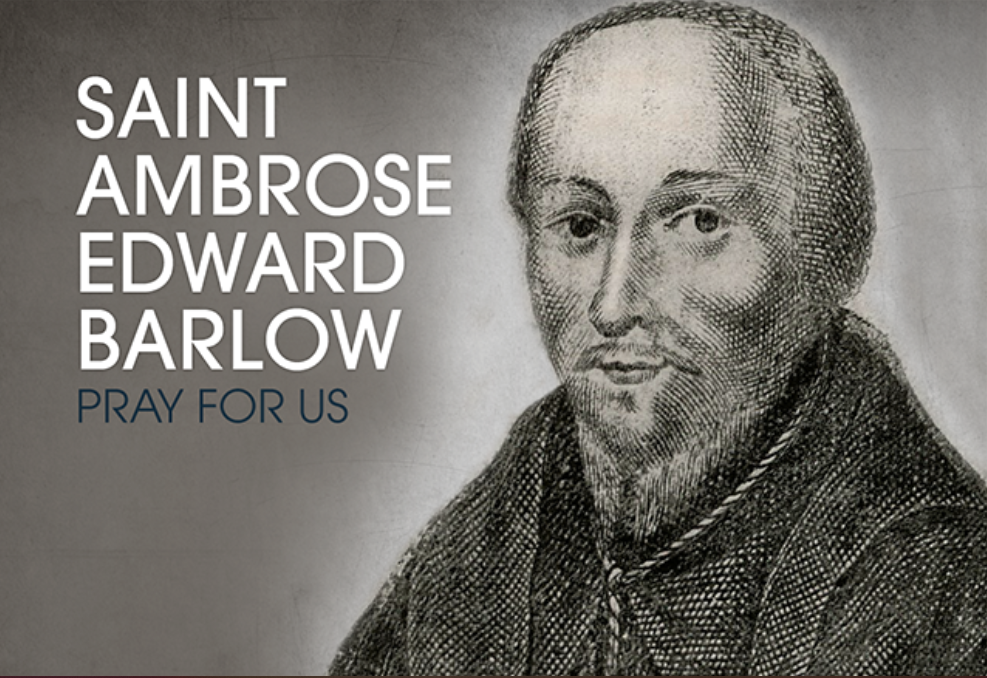
Saint of the Day – September 10 – Saint Ambrose Edward Barlow

St. Ambrose Edward Barlow (1585-1641) was born near Manchester, England, to a noble family. He was baptized Catholic at his birth, but was raised Protestant when Catholicism was outlawed by the reigning monarchy. His grandfather died while imprisoned for his Catholic faith, and his father had two-thirds of his estate confiscated for refusal to conform to the Church of England. Ambrose returned to Catholicism as an adult, recognized his vocation to the priesthood, and traveled to France to enter seminary. He was ordained in 1617 in the Order of St. Benedict. He returned to England to minister to underground Catholics in his native south Lancashire for 24 years, being financially supported with a pension arranged by his grandmother. Ambrose said Mass daily and administered the sacraments secretly to avoid detection by the authorities. He was arrested four times during his priesthood, each time being released without charge. When the king issued a decree that all Catholic priests should immediately flee the country or be arrested and condemned as traitors, St. Ambrose chose to stay, reasoning that he could not die a better death than to be martyred for being a Catholic priest. On April 25, 1631, just as he ended Easter Sunday Mass at Morley Hall near Manchester, he was arrested by a 400-strong armed mob led by the local Anglican vicar. He freely admitted to the charge of being a Catholic priest, and gave a defense of the true faith before his judge. He was sentenced to be hanged, drawn, quartered, and boiled in oil on September 10, 1641. His dead body was publicly displayed on a pike as a warning to other Catholic priests. St. Ambrose Edward Barlow is one of the Forty Martyrs of England and Wales. His feast day is September 10th.

//Catholic Company//
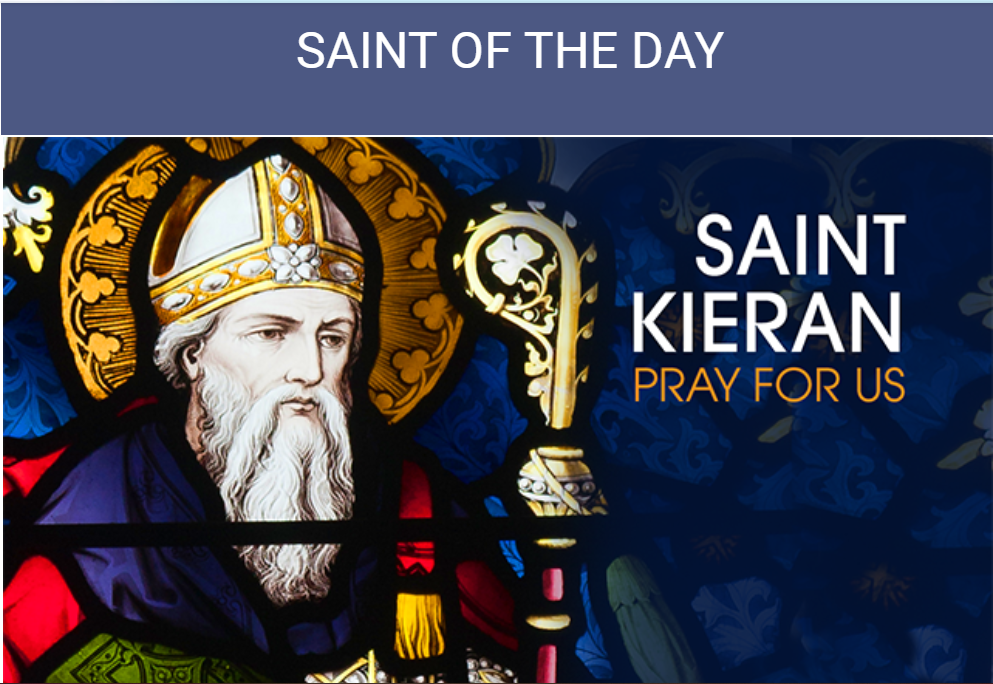

Saint of the Day – September 9 – Saint Kieran

St. Kieran the Younger (512-546 A.D.), also known as St. Ciaran, was born in Connacht, Ireland, the son of a carpenter. He demonstrated a great aptitude in his studies, being educated by a holy deacon who had him baptized. Kieran tended cattle in the fields before continuing his education at Saint Finnian’s monastery school at Clonard, where he became a monk. He soon earned the reputation for being the most learned monk at Clonard, and was held in high esteem by his instructors and peers. Kieran’s years of residence there were marked by many miracles. He also mentored, befriended, and tutored many of the founders of the Catholic Church in Ireland. Saint Kieran eventually left Clonard and went on to found the famous Clonmacnoise Abbey in West Meath Ireland, which attracted thousands of students from all over Europe. St. Kieran was one of the Twelve Apostles of Ireland – the first twelve bishops in Ireland consecrated by St. Patrick. He is also honored as the first Irish-born saint. St. Kieran’s feast day is September 9th.


Saint of the Day – September 8 – Saint Adrian of Nicomedia

St. Adrian of Nicomedia (d. 306 A.D.) lived under the Christian persecutions of the Roman Emperor Galerius Maximian. Thirty-three Christians were seized in Nicomedia, brought before a judge, and ordered to be savagely beaten. With each new torture the men received, they bravely proclaimed their faith in Christ. They argued with the judge that by his tortures he was only increasing their heavenly glory, while guaranteeing his own damnation to hell. Adrian, a man of 28 years, was head of the praetorium and witnessed the steadfast faith of these men. He was moved to the point of conversion, and exclaimed that he, too, would reject paganism to suffer and die for the name of Christ along with the other Christians. One of Adrian’s servants ran to tell his wife, Natalie, what her husband had done. Natalie, who was secretly a Christian, ran to the prison in joy at the news of her husband’s newfound faith, and encouraged him to stay strong and steadfast in it. After Adrian refused to recant his profession of faith in Christ, he was thrown into prison with the other men and cruelly tortured. His arms and legs were severed on an anvil before finally dying as a martyr. Saint Adrian is the patron saint of soldiers, arms dealers, and butchers. His feast day is September 8th.

//Catholic Company//


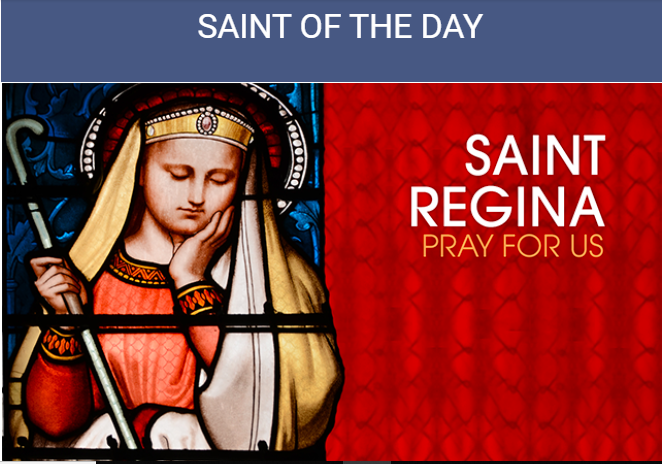
Saint of the Day – September 7 – Saint Regina

Saint Regina (d. 286 A.D.) was born to pagan parents in France. Her mother died in childbirth, and her father gave her to the care of a Christian nurse who secretly baptized her and raised her in the Christian faith. As Regina grew older her embrace of Christianity became evident, and her father disowned her as a result. Regina then went to live with her Christian nurse. They lived in poverty, and Regina tended sheep to help support the household. This solitude allowed her time to pray and meditate on the lives of the saints. When she was fifteen years of age, a Roman proconsul by the name of Olybrius was determined to marry her. He became greatly disturbed when he discovered that she was a Christian. He asked her to renounce her faith in order to save her life and secure a prosperous marriage with him. Regina staunchly refused to deny her faith, having already taken a vow of virginity to Christ. For her defiance she was cast into prison. Hoping that her resolve would gradually weaken, Olybrius visited her in prison and asked her once more to renounce her faith. Regina’s determination only increased with time, and she again refused. Olybrius, angered, had her severely tortured with her body being scourged, burned, and raked. Finally, she was beheaded. Her resolve under torture and the appearance of a dove above her head caused witnesses to convert to Christianity. After her death many miracles were attributed to her relics. St. Regina is the patron of poor people, shepherdesses, and torture victims. Her feast day is September 7th.

//Catholic Company//


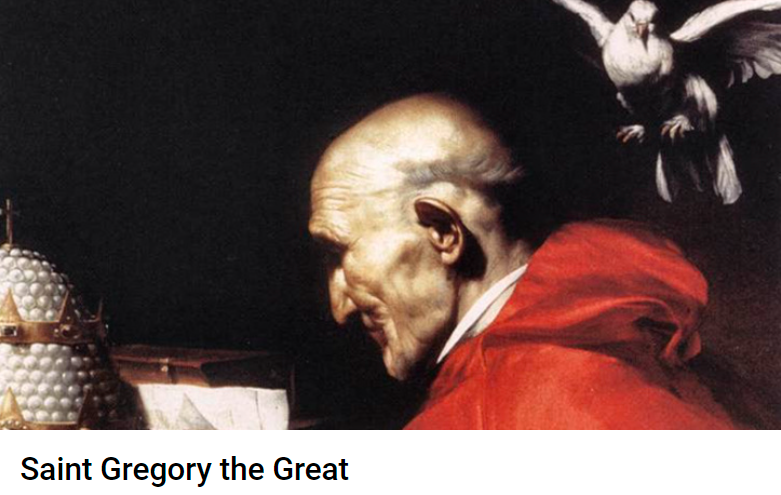
Saint of the Day – September 3 – Saint Gregory the Great

(C. 540 – MARCH 12, 604)

Saint Gregory the Great’s Story

Gregory was the prefect of Rome before he was 30. After five years in office he resigned, founded six monasteries on his Sicilian estate, and became a Benedictine monk in his own home at Rome.

Ordained a priest, Gregory became one of the pope’s seven deacons, and also served six years in the East as papal representative in Constantinople. He was recalled to become abbot, but at the age of 50 was elected pope by the clergy and people of Rome.

Gregory was direct and firm. He removed unworthy priests from office, forbade taking money for many services, emptied the papal treasury to ransom prisoners of the Lombards and to care for persecuted Jews and the victims of plague and famine. He was very concerned about the conversion of England, sending 40 monks from his own monastery. He is known for his reform of the liturgy, and for strengthening respect for doctrine. Whether he was largely responsible for the revision of “Gregorian” chant is disputed.

Gregory lived in a time of perpetual strife with invading Lombards and difficult relations with the East. When Rome itself was under attack, he interviewed the Lombard king.

His book, Pastoral Care, on the duties and qualities of a bishop, was read for centuries after his death. He described bishops mainly as physicians whose main duties were preaching and the enforcement of discipline. In his own down-to-earth preaching, Gregory was skilled at applying the daily Gospel to the needs of his listeners. Called “the Great,” Gregory has been given a place with Augustine, Ambrose, and Jerome, as one of the four key doctors of the Western Church.

An Anglican historian has written: “It is impossible to conceive what would have been the confusion, the lawlessness, the chaotic state of the Middle Ages without the medieval papacy; and of the medieval papacy, the real father is Gregory the Great.”

Reflection

Gregory was content to be a monk, but he willingly served the Church in other ways when asked. He sacrificed his own preferences in many ways, especially when he was called to be Bishop of Rome. Once he was called to public service, Gregory gave his considerable energies completely to this work. Gregory’s description of bishops as physicians fits in well with Pope Francis’ description of the Church as a “field hospital.”

Saint Gregory the Great is the Patron Saint of:

England
Epilepsy
Musicians
Teachers

//Franciscan Media//


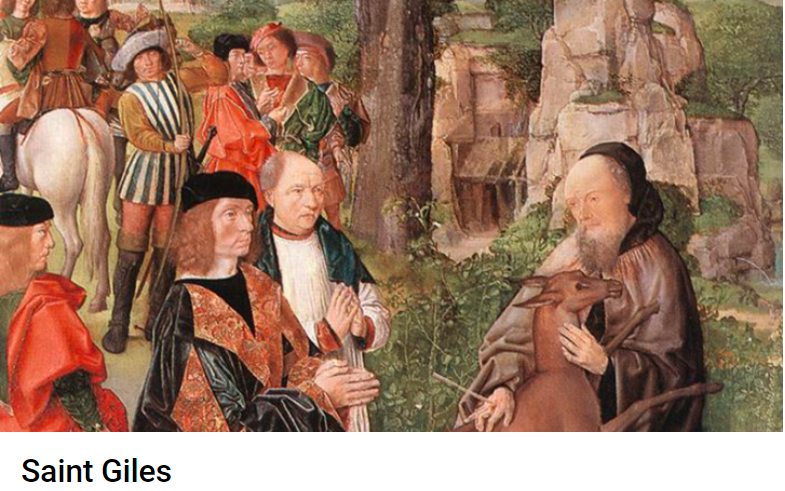
Saint of the Day – September 1 – Saint Giles

(C. 650 – 710)
Saint Giles’ Story

Despite the fact that much about Saint Giles is shrouded in mystery, we can say that he was one of the most popular saints in the Middle Ages. Likely, he was born in the first half of the seventh century in southeastern France. That is where he built a monastery that became a popular stopping-off point for pilgrims making their way to Compostela in Spain, and the Holy Land.

In England, many ancient churches and hospitals were dedicated to Giles. One of the sections of the city of Brussels is named after him. In Germany, Giles was included among the so-called 14 Holy Helpers, a popular group of saints to whom people prayed, especially for recovery from disease, and for strength at the hour of death. Also among the 14 were Saints Christopher, Barbara, and Blaise. Interestingly, Giles was the only non-martyr among them. Devotion to the “Holy Helpers” was especially strong in parts of Germany and in Hungary and Sweden. Such devotion made his popularity spread. Giles was soon invoked as the patron of the poor and the disabled.

The pilgrimage center that once drew so many fell into disrepair some centuries after Giles’ death.

Reflection

Saint Giles may not have been a martyr but, as the word martyr means, he was a true witness to the faith. This is attested to by the faith of the People of God in the Middle Ages. He became one of the “holy helpers” and can still function in that role for us today.

Saint Giles is the Patron Saint of:

Beggars
The Disabled
Disasters
The Poor

//Catholic Company//


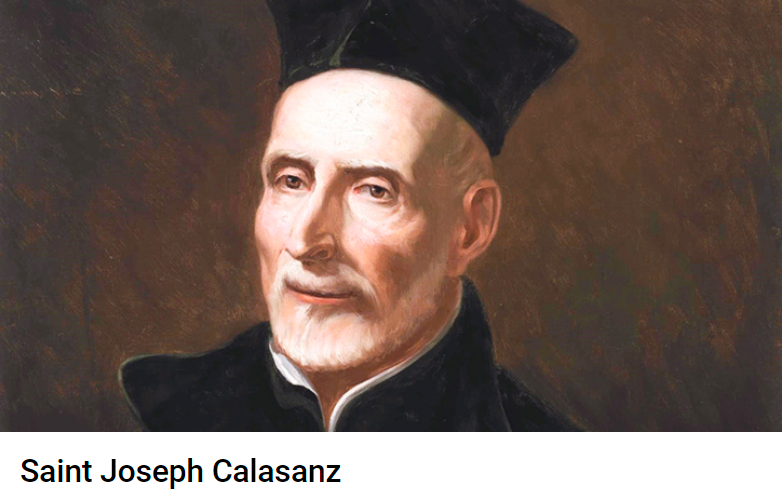
Saint of the Day – August 26 – Saint Joseph Calasanz

(SEPTEMBER 11, 1556 – AUGUST 25, 1648)
Saint Joseph Calasanz’ Story

From Aragon where he was born in 1556, to Rome where he died 92 years later, fortune alternately smiled and frowned on the work of Joseph Calasanz. A priest with university training in canon law and theology, respected for his wisdom and administrative expertise, he put aside his career because he was deeply concerned with the need for education of poor children.

When he was unable to get other institutes to undertake this apostolate at Rome, Joseph and several companions personally provided a free school for deprived children. So overwhelming was the response that there was a constant need for larger facilities to house their effort. Soon, Pope Clement VIII gave support to the school, and this aid continued under Pope Paul V. Other schools were opened; other men were attracted to the work, and in 1621 the community—for so the teachers lived—was recognized as a religious community, the Clerks Regular of Religious Schools—Piarists or Scolopi. Not long after, Joseph was appointed superior for life.

A combination of various prejudices and political ambition and maneuvering caused the institute much turmoil. Some did not favor educating the poor, for education would leave the poor dissatisfied with their lowly tasks for society! Others were shocked that some of the Piarists were sent for instruction to Galileo—a friend of Joseph—as superior, thus dividing the members into opposite camps. Repeatedly investigated by papal commissions, Joseph was demoted; when the struggle within the institute persisted, the Piarists were suppressed. Only after Joseph’s death were they formally recognized as a religious community. His liturgical feast is celebrated on August 25.

Reflection

No one knew better than Joseph the need for the work he was doing; no one knew better than he how baseless were the charges brought against him. Yet if he were to work within the Church, he realized that he must submit to its authority, that he must accept a setback if he was unable to convince authorized investigators. While the prejudice, the scheming and the ignorance of men often keep the truth from emerging for a long period of time, Joseph was convinced, even under suppression, that his institute would again be recognized and authorized. With this trust he joined exceptional patience and a genuine spirit of forgiveness.

//Franciscan Media//


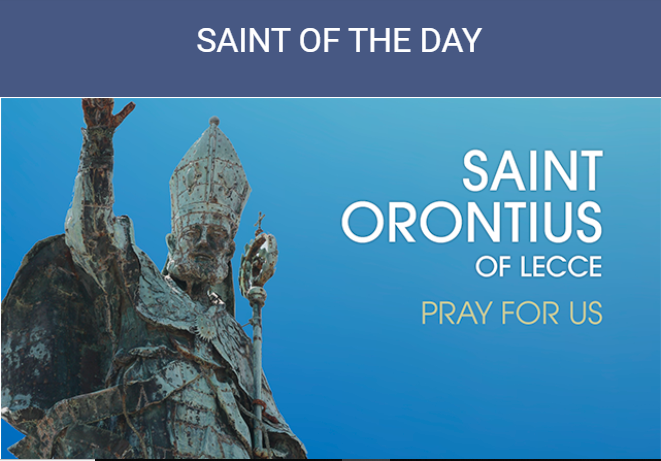
Saint of the Day – August 26 – Saint Orontius of Lecce

St. Orontius of Lecce (1st c.) was the son of the Roman imperial treasurer in Lecce, Italy. Upon his father’s death he inherited the position. Orontius was converted to the Christian faith along with his nephew, Fortunatus, by Justus, a disciple of St. Paul the Apostle. Orontius was later denounced to the authorities as a Christian and was ordered to sacrifice to the pagan gods. He refused and was arrested, removed from his office, tortured, and exiled to Corinth together with Fortunatus. In Corinth the pair met St. Paul the Apostle, who consecrated Orontius as the first bishop of Lecce. When Orontius and Fortunatus returned to Lecce they were persecuted and imprisoned again, but were released and ordered to stop preaching. They continued to preach in the surrounding cities, and were arrested a third time and executed. St. Orontius’ feast day is August 26th.

//Catholic Company//


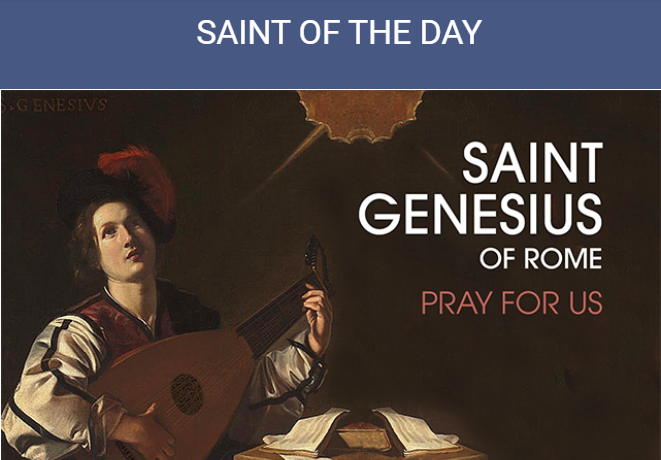
Saint of the Day – August 25 – Saint Genesius of Rome

St. Genesius of Rome (d. 303 AD) was a renowned actor and playwright, the leader of a popular acting troupe during the reign of Emperor Diocletian. When the Emperor was killing Christians, Genesius wrote plays to mock them and expose their secret rites to ridicule. To research for a play mocking baptism, he went to a priest pretending to desire the sacraments and was fully instructed as a catechumen. Genesius prepared his play and instructed the other actors in their parts. On performance day the Emperor was present. Genesius played the lead character seeking baptism, and the rite was performed in such a ludicrous manner that all present laughed. As the water was poured over Genesius’ head by an actor playing the priest’s part, Genesius saw a vision of the heavens opened and the hand of God touching him. He also saw an angel who showed him that his many sins had been washed away through the valid baptism he had just received. At that moment Genesius’ heart was changed by the Holy Spirit and he believed in the truth of Christianity. At the conclusion of the play Genesius boldly declared his new faith, recounting how he had been a scoffer until that moment. He implored the audience, including the Emperor, to follow Christ. The crowd thought this was part of the performance, but once they understood it was real, Genesius was seized. The Emperor, furious, subjected him to cruel tortures daily to make him renounce his faith in Christ. Genesius staunchly refused and was beheaded. The Christians collected his body and buried him with the other martyrs. St. Genesius is the patron saint of comedians, dancers, actors, musicians, printers, and torture victims. His feast day is August 25th.

//Catholic Company//


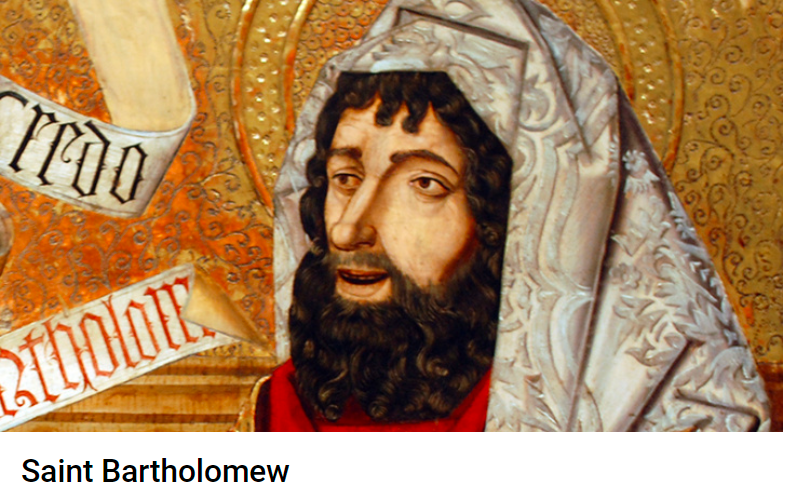
Saint of the Day – August 24 – Saint Bartholomew

(C. 1ST CENTURY)
Saint Bartholomew’s Story

In the New Testament, Bartholomew is mentioned only in the lists of the apostles. Some scholars identify him with Nathanael, a man of Cana in Galilee who was summoned to Jesus by Philip. Jesus paid him a great compliment: “Here is a true Israelite. There is no duplicity in him” (John 1:47b). When Nathanael asked how Jesus knew him, Jesus said, “I saw you under the fig tree” (John 1:48b). Whatever amazing revelation this involved, it brought Nathanael to exclaim, “Rabbi, you are the Son of God; you are the King of Israel” (John 1:49b). But Jesus countered with, “Do you believe because I told you that I saw you under the fig tree? You will see greater things than this” (John 1:50b).

Nathanael did see greater things. He was one of those to whom Jesus appeared on the shore of the Sea of Tiberias after his resurrection (see John 21:1-14). They had been fishing all night without success. In the morning, they saw someone standing on the shore though no one knew it was Jesus. He told them to cast their net again, and they made so great a catch that they could not haul the net in. Then John cried out to Peter, “It is the Lord.”

When they brought the boat to shore, they found a fire burning, with some fish laid on it and some bread. Jesus asked them to bring some of the fish they had caught, and invited them to come and eat their meal. John relates that although they knew it was Jesus, none of the apostles presumed to inquire who he was. This, John notes, was the third time Jesus appeared to the apostles.

Reflection

Bartholomew or Nathanael? We are confronted again with the fact that we know almost nothing about most of the apostles. Yet the unknown ones were also foundation stones, the 12 pillars of the new Israel whose 12 tribes now encompass the whole earth. Their personalities were secondary—without thereby being demeaned—to their great office of bearing tradition from their firsthand experience, speaking in the name of Jesus, putting the Word Made Flesh into human words for the enlightenment of the world. Their holiness was not an introverted contemplation of their status before God. It was a gift that they had to share with others. The Good News was that all are called to the holiness of being Christ’s members, by the gracious gift of God.

The simple fact is that humanity is totally meaningless unless God is its total concern. Then humanity, made holy with God’s own holiness, becomes the most precious creation of God.

Saint Bartholomew is the Patron Saint of:

Plasterers

//Franciscan Media//