Sermon Notes – October 12, 2025 – “Forgiven and Forgotten”

“Forgiven and Forgotten”

Father Peter Fitzgibbons

October 11-12, 2025

Gospel: Luke 17:11-19

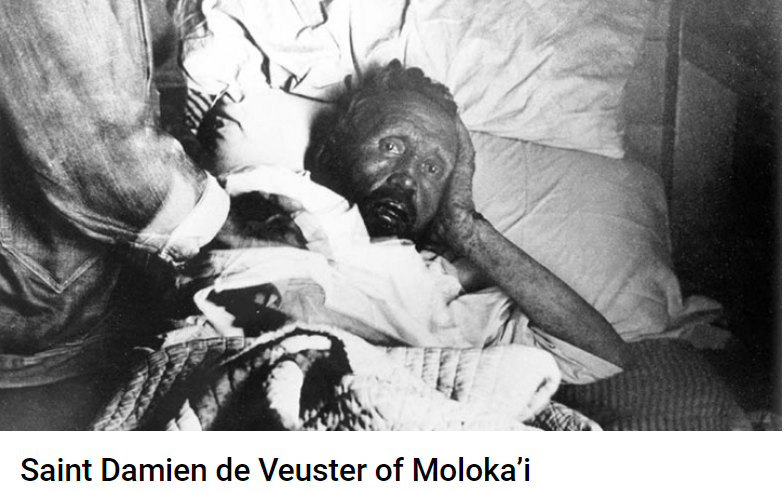
Leprosy is often mentioned in Scripture.  Now, because I’m not Dr. House although I have watched every episode, I wasn’t sure what Leprosy is.  This was pre-Google, so I looked it up in this book that in those days we called an encyclopedia.  Leprosy is now called Hansens Disease.  It is very rare in this country, and we have very effective treatment for those who get it.   Leprosy will literally eat you alive, and you will rot to death.  Your nose and fingers fall off, and your face becomes disfigured.  In the Old Testament, people with Leprosy were banished because the disease is contagious.  Father Damien, now Saint Damien, was a priest from Belgium.  When he heard that a leper colony in Hawaii had no priest, Father Damien went to the bishop and asked if he could be sent there.  The bishop told him, “If you go, you cannot go back.”  That was the law.  Yet, Father Damien said, “I will go.”  So, he went to work in the leper colony.  When he heard that a supply ship would be coming and that it had a priest on board, Father Damien wanted the priest to hear his confession.  So, he got into his boat and rowed out to the ship but, according to the law, the captain of the ship could not allow him on board because he had been exposed to Leprosy.   Undeterred, Father Damien made a public confession from his boat while the priest stood at the top of the ship.  One of the last pictures of him shows his face rotting away and some of his fingers are missing.  Having Leprosy is not the best way to go.  By the way, after Father Damien’s death, all the signs of Leprosy left him. 

A lot of diseases have distinct smells.  We all smell wonderful when we come to church with our different aftershaves and perfumes.  But when I open the church on Monday mornings, a wall of different aromas hit me in the face, and I’m reminded of my time in the Army and the gas chamber.  It was a real treat for the senses.   We all have two aromas; one comes from holiness, and the other comes from the sin in our souls.  If our soul has sin, it smells.  You may be wondering, “Father, how do you know that?”   Saint John Vianney, the Curé d’Ars, could smell it.  There could be a long line of people waiting for Confession, and he would come out of the confessional, sniff around, point to someone in line, and say, “You are first.  You have mortal sin in your soul.”  He could smell the mortal sin in that soul because we all have it.  Leprosy affects the outside of the body while sin rots our souls from the inside.  Our souls die of mortal sin more immediately while unrepentant venial sin is a slow death.  But we can go to our Good Lord to be cured in the Sacrament of Penance.  We can get treatment for the infection and rot in our souls.  By the way, when we receive the Sacrament of Penance, one of the best prayers never said is “thank you.”   

I always tell people that if they want to be beautiful or handsome they should be holy, and neither time nor disease will be able to take it away from them.  Have holiness in your soul.  Saint Teresa of Calcutta and Saint John Paul II come to mind.  Saint Teresa was not exactly a candidate to be a runway model, but she was beautiful because she carried the living Christ in her soul.   At the end of his life, Saint John Paul II was drooling and shaking but everybody wanted to be near him because of the purity of his soul and the presence of Christ within him.  This is how we evangelize – not by giving away free stuff or having concerts – but by telling people what the Good Lord has done for us.  Our sins are forgiven.  The greatest experience of God’s love is the experience of His forgiveness.  Our sins are forgiven and forgotten.  The State of Washington, like other states before them, tried to pass a law that would require me to reveal whatever I heard about abused children during Confessions.  I cannot and would not do that: 1) I’m old and I don’t remember who the heck came to Confession; and 2) I don’t hear individuals; I hear souls.  I hear sick souls coming in for God’s medicine.  Do I remember all that stuff?  No.  But what I do remember is their love of God and when I give them absolution, the love of God for them.  No matter how bad you think your sins are, God will forgive and forget everything. 

I have been a priest for 42 years, thanks to the goodness of God and His infinite patience.  There is not one sin that has ever affected me except my own.  I have done some interesting things, but that is immaterial compared to the love of God.  Nobody’s sins are going to frighten me.  I tell people in church and at hospitals, “I’ve seen more body parts than you will ever have, so cover up.  I’m not impressed.”   I’ve been a priest for a long time, and I’ve been around the world.  I’ve been there and done that.  If you have a sin I haven’t heard before, I’ll pay you for the privilege of hearing it.  But do you know what impresses me while I’m hearing confessions?  It’s not the sins.  I am impressed by the love that people have to come to Confession, open their souls, and to give what they have.  The worst things people have to confess is what God wants in the Sacrament of Penance.  In exchange, He will give them the best which is Himself.  This is why I say that the most neglected part of the Sacrament of Penance is to say, “thank you.”  Do not take God’s love for granted.

Each night before I go to bed I try to say, “thank you.”  Then I think of how inadequate my gratitude is because I cannot possibly repay God for all that He has done for me.   But that is what we should do – to thank Him for His great love for us.  The greatest part of His love is manifested in His forgiveness of our sins.  By doing so, He saves us from spiritual death in the next world to come.

Father’s Reflections . . . This week I was visiting a lady who is in a nursing care facility.  I went into her room and began talking to her to get a sense of her consciousness and focus.  I said, “Your accent isn’t from around here.  Where did you grow up?”   She was confused and couldn’t quite put it all together, so I said, “That’s okay.  I don’t remember where I grew up because I never grew up.  I’m Peter Pan.”  She thought that was hilarious and laughed.  My work here is done.

How will you apply this message to your life?  ________________________________________

You can read all of Father Fitzgibbons’ sermons by going to AnnunciationCatholicAlbemarle.com, clicking on “Blog,” then “Categories,” and then “Sermon Notes.”   Sermon Notes are also available on the church’s Facebook page at OLA.Catholic.Church.  Click on “Groups” and then “Sermon Notes.

Sermon Notes – February 11, 2024 – “Forget as God Forgets”

“Forget as God Forgets”

Father Peter Fitzgibbons

February 10 – 11, 2024

Gospel: Mark 1:40-45

Today’s reading is from the Old Testament in the book of Leviticus, and it’s about leprosy.  Anyone who had leprosy was required to shout, “Unclean, unclean!”  This reminded me of the pandemic a couple of years ago when people got hyped up if someone contracted the disease, “Covid, Covid!”  It is not terminal.   

I’m going to give you some philosophical continuing credit.  What is a primary virtue?  The primary virtue is justice.  Why justice?  Because justice is the virtue that orders all the other virtues to their necessary and proper end which is Almighty God.  So, when we are talking about the budget and how we have billions and billions of dollars to allocate, we are talking about real money.  “We’ll allocate this much here and this much there.”  Now think about justice.  I, Stump, and many others in the parish are combat veterans.  We don’t get free medical care, and I even retired from the Army.  Un-uh Un-uh Un-uh.   If I tried to get a benefit, I’d have to prove it was connected to my Army service.  It’s easier to go before the Supreme Court than it is to get the VA to recognize a disability due to military service.  So, we don’t give justice to our military service members, but we are giving away billions and billions of dollars to people who enter the United States illegally.   But those of us who are citizens not so much.

One thing in the spiritual life that most of us don’t think about is that we are called to be like God in all things.  That sounds reasonable, doesn’t it?  But that would be tough because God is perfection of all attributes and virtues.  That would be kind of difficult for us to attain.  But we try.  There is one aspect of our lives which is very important for us to concentrate on and that is our memory.  Now I don’t mean you have to remember every password on every device you own.  The memory of a spiritual person needs to be both good and bad.  “Okay Father, explain that.”  I’m glad you asked.  Your memory has to be bad like God’s memory is bad.  “How is God’s memory bad?”  Well, He says in the Old Testament, “I will put your sins behind you.  Your sins are remembered no more” (Ezekiel 18:22).  So, God forgives and forgets.  We are called to forget our sins that have been forgiven and to let them go.  And, to not remember the sins that others may or may not have committed against us just like God does. 

We also need a perfect memory so that we can remember the love and mercy God has shown us by forgiving our sins, giving us the gift of His very Self in the Sacraments, and the promise of eternal life.  We are called to show that same mercy and love to His people.  A perfect memory manifests itself in the Prayers of Thanksgiving.  Be grateful for what you have.  My theme for Lent this year is, “Someday, tomorrow will begin without us.”   The other morning, I was hearing first confessions from children at Saint Luke’s.  They are so young, so I don’t make them spend a lot of time in the confessional.  A lot of them said that they had hurt their parents, brothers, and sisters.  I told them, “Remember, your time with them is so small.  Cherish the time you have with them, because you will miss that time when they are gone.  They may be difficult at times, and if you had a brother like mine, you would understand that.  If you had a brother like me, you would also understand.  But cherish them as God cherishes us.”

God promises to be with us as long as we don’t throw Him out of our souls through mortal sins or repeated venial sins.  We have our Lord’s protection, and we get pretty upset if something happens to us that we didn’t expect, and it ruins our plans.   Saint Teresa of Avila said to our Lord, “If this is how You treat Your friends, no wonder why You have so few of them!”  But we will never know how much evil God has protected us from for ourselves, our families, and our loved ones.  We will never know until we see Him face-to-face when all things will be made present and known.  We do not know but God does.  Just think of the things you have been protected from, and you haven’t died yet, have you?   A lot of my classmates did not reach my age nor did my twin brother.   I always thought I’d be the first to go because I’ve been to some bad places.  To my own credit, it seemed like a good idea at the time.  We do not know the threats God has protected us from, how much love He has given us, and the gifts He has given us as a result of our prayers.  Perhaps they were not the ones we asked for but were better ones.  This is how we must work on our memory.  The most important part of a bad memory is forgetting oneself for the love of God.  We must forget ourselves.  Our Lord said, “Leave everything behind and come follow Me.”  The most important thing in spiritual life is memory.

How will you apply this message to your life __________________________________________

You can read all of Father Fitzgibbons’ sermons by going to annunciationcatholicalbemarle.com and clicking on “Blog” then “Categories” then “Sermon Notes.”  On a cell phone: click on “Blog” and then “Menu.”  Scroll to the bottom and click on “Categories.”  Sermon Notes are also available on the Church’s Facebook page at ola.catholic.church.  Click on “Groups” and then “Sermon Notes.”


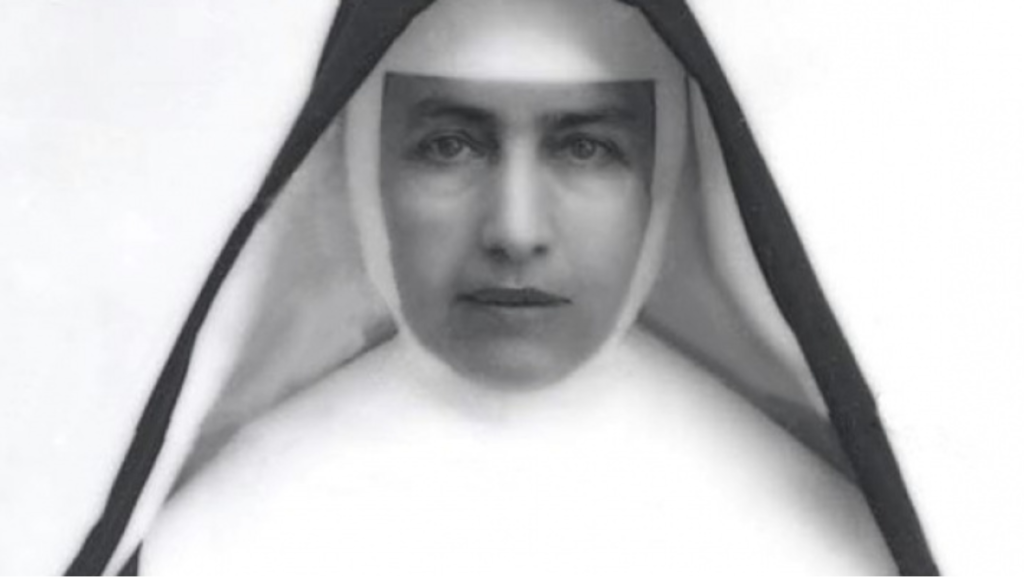
Saint of the Day – January 23 – Saint Marianne Cope

(JANUARY 23, 1838 – AUGUST 9, 1918)

Saint Marianne Cope’s Story

Though leprosy scared off most people in 19th-century Hawaii, that disease sparked great generosity in the woman who came to be known as Mother Marianne of Molokai. Her courage helped tremendously to improve the lives of its victims in Hawaii, a territory annexed to the United States during her lifetime (1898).

Mother Marianne’s generosity and courage were celebrated at her May 14, 2005, beatification in Rome. She was a woman who spoke “the language of truth and love” to the world, said Cardinal José Saraiva Martins, prefect of the Congregation for Saints’ Causes. Cardinal Martins, who presided at the beatification Mass in St. Peter’s Basilica, called her life “a wonderful work of divine grace.” Speaking of her special love for persons suffering from leprosy, he said, “She saw in them the suffering face of Jesus. Like the Good Samaritan, she became their mother.”

On January 23, 1838, a daughter was born to Peter and Barbara Cope of Hessen-Darmstadt, Germany. The girl was named after her mother. Two years later the Cope family emigrated to the United States and settled in Utica, New York. Young Barbara worked in a factory until August 1862, when she went to the Sisters of the Third Order of Saint Francis in Syracuse, New York. After profession in November of the next year, she began teaching at Assumption parish school.

Marianne held the post of superior in several places and was twice the novice mistress of her congregation. A natural leader, three different times she was superior of St. Joseph’s Hospital in Syracuse, where she learned much that would be useful during her years in Hawaii.

Elected provincial in 1877, Mother Marianne was unanimously re-elected in 1881. Two years later the Hawaiian government was searching for someone to run the Kakaako Receiving Station for people suspected of having leprosy. More than 50 religious communities in the United States and Canada were asked. When the request was put to the Syracuse sisters, 35 of them volunteered immediately. On October 22, 1883, Mother Marianne and six other sisters left for Hawaii where they took charge of the Kakaako Receiving Station outside Honolulu; on the island of Maui they also opened a hospital and a school for girls.

In 1888, Mother Marianne and two sisters went to Molokai to open a home for “unprotected women and girls” there. The Hawaiian government was quite hesitant to send women for this difficult assignment; they need not have worried about Mother Marianne! On Molokai she took charge of the home that Saint Damien de Veuster had established for men and boys. Mother Marianne changed life on Molokai by introducing cleanliness, pride, and fun to the colony. Bright scarves and pretty dresses for the women were part of her approach.

Awarded the Royal Order of Kapiolani by the Hawaiian government and celebrated in a poem by Robert Louis Stevenson, Mother Marianne continued her work faithfully. Her sisters have attracted vocations among the Hawaiian people and still work on Molokai.

Mother Marianne died on August 9, 1918, was beatified in 2005, and canonized seven years later.

Reflection

The government authorities were reluctant to allow Mother Marianne to be a mother on Molokai. Thirty years of dedication proved their fears unfounded. God grants gifts regardless of human shortsightedness and allows those gifts to flower for the sake of the kingdom.

//Franciscan Media//


Saint of the Day – May 10 – Saint Damien de Veuster of Moloka’i

(JANUARY 3, 1840 – APRIL 15, 1889)

Saint Damien de Veuster of Moloka’i’s Story

When Joseph de Veuster was born in Tremelo, Belgium, in 1840, few people in Europe had any firsthand knowledge of leprosy, Hansen’s disease. By the time he died at the age of 49, people all over the world knew about this disease because of him. They knew that human compassion could soften the ravages of this disease.

Forced to quit school at age 13 to work on the family farm, Joseph entered the Congregation of the Sacred Hearts of Jesus and Mary six years later, taking the name of a fourth-century physician and martyr. When his brother Pamphile, a priest in the same congregation, fell ill and was unable to go to the Hawaiian Islands as assigned, Damien quickly volunteered in his place. In May 1864, two months after arriving in his new mission, Damien was ordained a priest in Honolulu and assigned to the island of Hawaii.

In 1873, he went to the Hawaiian government’s leper colony on the island of Moloka’i, set up seven years earlier. Part of a team of four chaplains taking that assignment for three months each year, Damien soon volunteered to remain permanently, caring for the people’s physical, medical, and spiritual needs. In time, he became their most effective advocate to obtain promised government support.

Soon the settlement had new houses and a new church, school and orphanage. Morale improved considerably. A few years later, he succeeded in getting the Franciscan Sisters of Syracuse, led by Mother Marianne Cope, to help staff this colony in Kalaupapa.

Damien contracted Hansen’s disease and died of its complications. As requested, he was buried in Kalaupapa, but in 1936 the Belgian government succeeded in having his body moved to Belgium. Part of Damien’s body was returned to his beloved Hawaiian brothers and sisters after his beatification in 1995.

When Hawaii became a state in 1959, it selected Damien as one of its two representatives in the Statuary Hall at the US Capitol. Damien was canonized by Pope Benedict XVI on October 11, 2009.

Reflection

Some people thought Damien was a hero for going to Moloka’i and others thought he was crazy. When a Protestant clergyman wrote that Damien was guilty of immoral behavior, Robert Louis Stevenson vigorously defended him in an “Open Letter to Dr. Hyde.”

//Franciscan Media//