Fr. Mike examines the next characteristic of the Church, the Church is holy, and he emphasizes two important ideas. The first is that the Church is unfailingly holy only because of God’s gracious gift to us. The second is that each and every one of the activities of the Church are for two purposes: the sanctification of men in Christ and the glorification of God. We conclude with a reminder from St. Therese on the importance of charity, that love of God is the “vocation which includes all others.” Today’s readings from the Catechism are paragraphs 823-829.
In this new paragraph—”The Church is One, Holy, Catholic, and Apostolic”—the Catechism explains how and why the Church is “One”. Fr. Mike highlights the many manifestations of the good that Jesus works through the Church, and he also urges us to cling to the “visible bonds of unity” that Christ offers us. Today’s readings are Catechism paragraphs 811-816.
Christ is the head of the Church. The Catechism describes Jesus’ relationship to his Church as “a personal relationship…expressed by the image of bridegroom and bride.” Fr. Mike points out how important this is by reminding us that, underneath all of the doctrine and the dogma, God is madly in love with you. If we always remember this love, everything else will fall into place. Today’s readings are Catechism paragraphs 792-796.
The Church has no other light than Christ’s, and the Holy Spirit is the source of all its holiness. We believe that the Church is “holy,” “catholic,” “one,” and “apostolic.” Fr. Mike explains that Jesus has promised to guide the Church in the truth. Members of the Church are called and uniquely belong to the Lord. We also learn that the word ‘church’ has three inseparable meanings: the liturgical assembly, the local community, and the universal community of believers. The Church draws her life from the body of Christ and so becomes Christ’s body. Today’s readings are Catechism paragraphs 748-752.
As we conclude this article on the Holy Spirit, the Catechism teaches us today about the relationship between the Holy Spirit and the Church. Fr. Mike breaks down the four main ways the Holy Spirit is active in the mission of Christ and how the life of the Church completes that mission. Today’s readings are Catechism paragraphs 737-747.
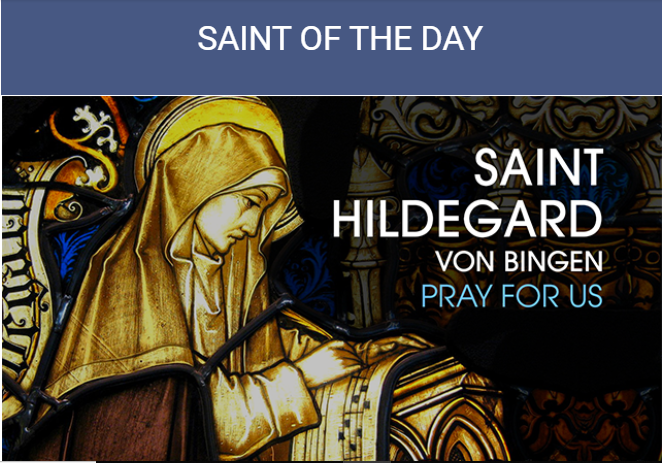
St. Hildegard von Bingen (1098–1179) was born to a large and noble German family. She began to have mystical visions at the age of three which continued throughout her life. Her parents, promising her to the service of God, sent her to be educated at the Benedictine Abbey by an anchoress when she was about eight years of age. At the age of fourteen she became a consecrated nun attached to the Abbey, where she lived a quiet life of prayer for many years. At the age of 38, after the anchoress’ death, she was chosen as the new leader of a growing group of nuns. Hildegard led a remarkable and unusual life for a woman of her day. She was an avid composer of sacred music and liturgy, in addition to poems and plays. She also wrote heavily on theology, natural medicine, and natural science. At the age of 42, at the command of God, Hildegard began writing down what she saw in her visions. Her works were widely read, even by the Pope, and leaders around the world sought her council. Her fame as a mystic and prophetess grew, earning her the name “Sibyl of the Rhine.” More nuns flocked to join her, causing Hildegard to establish a new monastery at Rupertsberg. She wrote proficiently on the harmony of created nature and man’s need to live in balance with it, especially in virtue, morality, and the love of God, which led Pope Benedict XVI to declare her the fourth female Doctor of the Church in 2012 alongside Teresa of Avila, Catherine of Siena, and Thérèse of Lisieux. Because her works were far ahead of her time she is regarded as a historical phenomenon. Hildegard of Bingen is considered the founder of scientific natural history in Germany. Her feast day is September 17th.
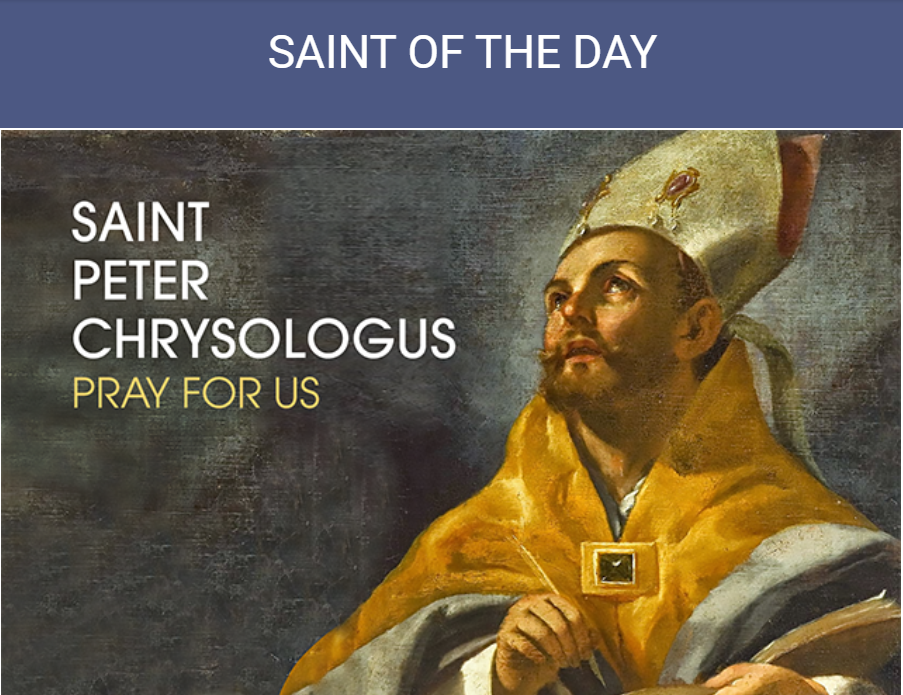
St. Peter Chrysologus (406-450 A.D.) was born in Imola, Italy. He was an adult convert to Christianity and studied under his bishop, Cornelius, who ordained him a deacon. In his day the city of Ravenna was the center of the Roman Empire, making the Archbishop of Ravenna an important position in the Church. When the Archbishop of Ravenna died, a new archbishop was elected by the clergy and the people of Ravenna. Bishop Cornelius of Imola went to Rome with his deacon, St. Peter Chyrsologus, to have the Ravenna appointment confirmed by Pope Sixtus III. When the pope saw St. Peter, he appointed him the new Archbishop of Ravenna instead. St. Peter was an effective shepherd who stamped out paganism, heresy, and ecclesiastical abuses from his diocese, earning the high regard of Emperor Valentinan III who resided in Ravenna. He also organized services to help the poor of the city. St. Peter was renowed for his profound and eloquent sermons, and his skill with taking complex theological truths and putting them in plain language, earning him the name ‘Chrysologus’ meaning ‘the man of golden speech’ or ‘golden word’ as well as the ‘Doctor of Homilies.’ In 1729, Pope Benedict XIII declared him a Doctor of the Church. His feast day is July 30.
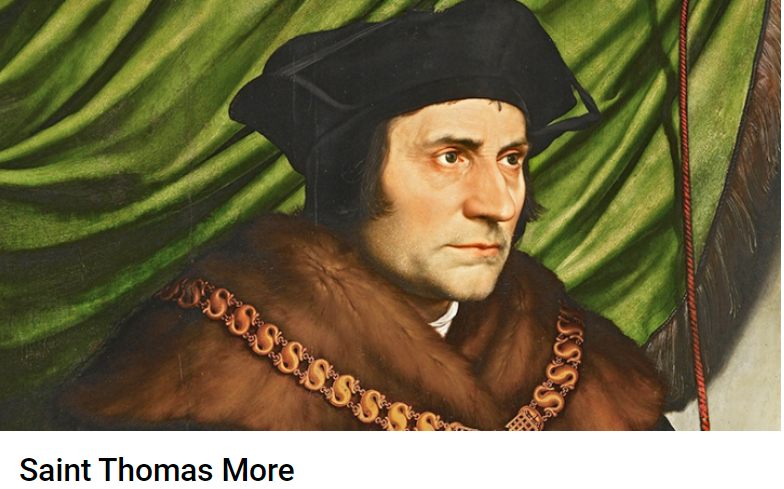
His belief that no lay ruler has jurisdiction over the Church of Christ cost Thomas More his life.
Beheaded on Tower Hill, London, on July 6, 1535, More steadfastly refused to approve King Henry VIII’s divorce and remarriage and establishment of the Church of England.
Described as “a man for all seasons,” More was a literary scholar, eminent lawyer, gentleman, father of four children, and chancellor of England. An intensely spiritual man, he would not support the king’s divorce from Catherine of Aragon in order to marry Anne Boleyn. Nor would he acknowledge Henry as supreme head of the Church in England, breaking with Rome, and denying the pope as head.
More was committed to the Tower of London to await trial for treason: not swearing to the Act of Succession and the Oath of Supremacy. Upon conviction, More declared he had all the councils of Christendom and not just the council of one realm to support him in the decision of his conscience.
Reflection
Four hundred years later in 1935, Thomas More was canonized a saint of God. Few saints are more relevant to our time. In the year 2000, in fact, Pope John Paul II named him patron of political leaders. The supreme diplomat and counselor, he did not compromise his own moral values in order to please the king, knowing that true allegiance to authority is not blind acceptance of everything that authority wants. King Henry himself realized this and tried desperately to win his chancellor to his side because he knew More was a man whose approval counted, a man whose personal integrity no one questioned. But when Thomas More resigned as chancellor, unable to approve the two matters that meant most to Henry, the king had to get rid of him.
Saint Thomas More is the Patron Saint of:
Attorneys Civil Servants Court Clerks Lawyers Politicians Public Servants
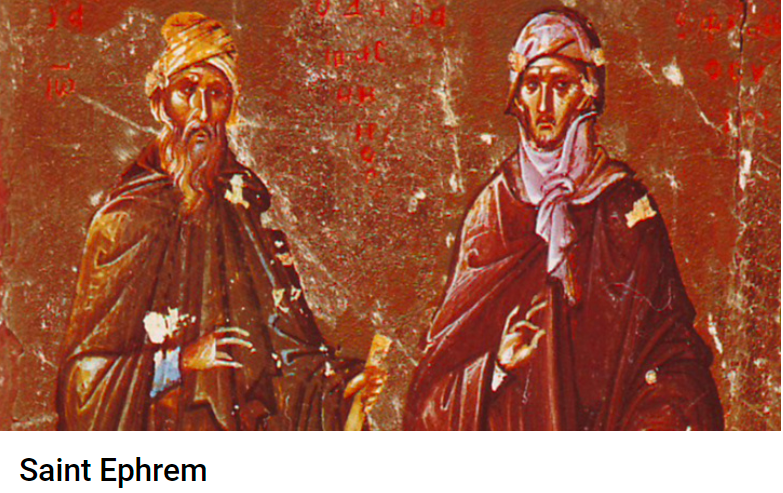
Poet, teacher, orator, and defender of the faith, Ephrem is the only Syriac Christian recognized as a doctor of the Church. He took upon himself the special task of opposing the many false doctrines rampant at his time, always remaining a true and forceful defender of the Catholic Church.
Born in Nisibis, Mesopotamia, he was baptized as a young man and became famous as a teacher in his native city. When the Christian emperor had to cede Nisibis to the Persians, Ephrem fled as a refugee to Edessa, along with many other Christians. He is credited with attracting great glory to the biblical school there. He was ordained a deacon but declined becoming a priest. Ephrem was said to have avoided presbyteral consecration by feigning madness!
He had a prolific pen, and his writings best illumine his holiness. Although he was not a man of great scholarship, his works reflect deep insight and knowledge of the Scriptures. In writing about the mysteries of humanity’s redemption, Ephrem reveals a realistic and humanly sympathetic spirit and a great devotion to the humanity of Jesus. It is said that his poetic account of the Last Judgment inspired Dante.
It is surprising to read that he wrote hymns against the heretics of his day. He would take the popular songs of the heretical groups and using their melodies, compose beautiful hymns embodying orthodox doctrine. Ephrem became one of the first to introduce song into the Church’s public worship as a means of instruction for the faithful. His many hymns have earned him the title “Harp of the Holy Spirit.”
Ephrem preferred a simple, austere life, living in a small cave overlooking the city of Edessa. It was here that he died around 373.
Reflection
Many Catholics still find singing in church a problem, probably because of the rather individualistic piety that they inherited. Yet singing has been a tradition of both the Old and the New Testaments. It is an excellent way of expressing and creating a community spirit of unity as well as of joy. An ancient historian testifies that Ephrem’s hymns “lent luster to the Christian assemblies.” We need some modern Ephrems—and cooperating singers—to do the same for our Christian assemblies today.